
Establishing an Evidence-based Pathway to Regulatory Approved Closure of an Ash Dam
Services: Closure risk assessment, erosion analysis, leachate modelling, groundwater assessment, vegetation analysis and closure planning
Location: Collinsville, Queensland
Date: 2013-2014
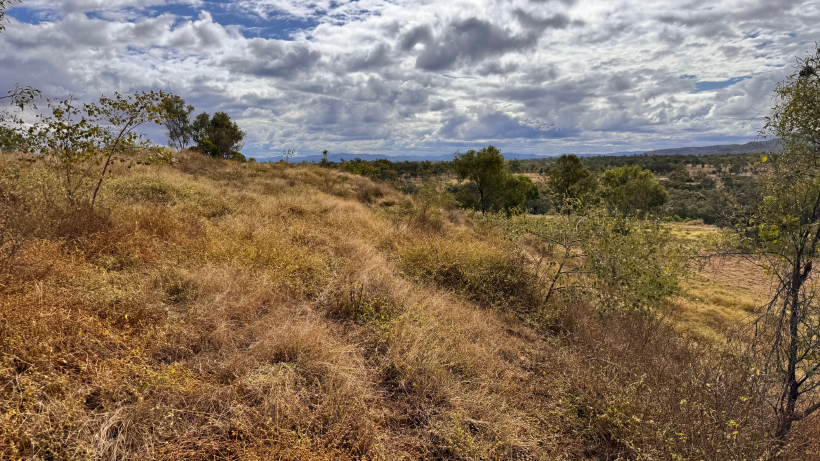
Collinsville Ash Dam
Our Scope
The closure of Collinsville ash dam required a practical and cost-effective approach capable of satisfying regulatory requirements, while limiting long-term environmental liabilities and supporting future land-use.
Environmental monitoring alone could not provide sufficient confidence that the ash dam would remain stable, or that heavy metals within the ash would not adversely affect groundwater and vegetation. Instead, Verterra developed a risk-based closure approach supported by quantitative analysis, targeted monitoring and adaptive management, utlimately achieving what is believed to be Queensland’s first regulatory approval for the closure of an ash dam.
PROVE
An initial risk assessment identified three priority issues requiring detailed investigation:
Stability of the final landform and its susceptibility to erosion
Potential leaching of contaminants from the stored ash into groundwater
Concentrations of heavy metals in pasture grasses established on or around the site
Quantitative and process-based methods were used to understand the mechanisms influencing each risk. Manning’s Equation was applied to identify the conditions under which erosion could occur, and establish appropriate landform design, management and monitoring criteria.
To assess groundwater risk, heavy-metal concentrations obtained from ash-dam core samples were used to estimate leaching potential and theoretical steady-state leachate concentrations. Estimates were developed using the sorption distribution coefficient for each metal and compared with relevant ANZECC trigger values and observed groundwater concentrations.
Piper plots and Stiff diagrams were also used to investigate whether groundwater chemistry showed a systematic influence from the ash dam. Paired sampling and analysis of variance were used to evaluate heavy-metal concentrations in pasture.
Together, these investigations provided a stronger evidence base than monitoring results alone.
IMPROVE
The findings were translated into an integrated closure and property-management plan addressing the key design, management and monitoring measures required to work towards a safe, stable, non-polluting and self-sustaining landform.
Verterra established criteria for:
Erosion stabilisation and landform performance
Groundwater and leachate monitoring
Management of heavy-metal risks in pasture
Targeted remedial treatment where monitoring identified an ongoing issue
Demonstrating when environmental parameters had stabilised and rectification requirements had plateaued
This adaptive approach allowed management measures to respond to observed performance while establishing a clear basis for determining when the closure criteria hado been satisfied.
VALUE
Verterra provided the clients with a scientifically defensible closure plan supported by quantitative studies.
The process-based leachate assessment significantly increased confidence in the predicted groundwater outcomes and shortened the monitoring pathway between dam closure and potential relinquishment of the Environmental Authority.
Verterra’s integrated evidence helped the clients negotiate with the regulator and supported what is believed to have been Queensland’s first approval for the closure of an ash dam. It also established a clearer pathway towards relinquishment, reduced uncertainty and helped limit the site’s long-term environmental and financial liabilities.