
Integrating Soil Evidence and Revegetation Design for Mine Water Diversions
Services: Soil and regolith sampling, geochemical assessment, amelioration planning, species selection and revegetation design
Location: Queensland
Date: 2022-2023
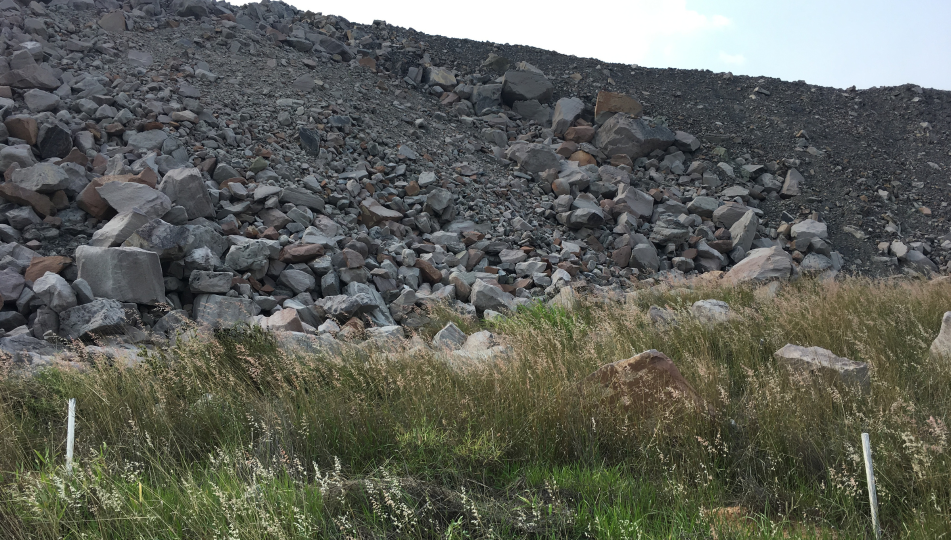
Detailed designs for surface-water management were required, including three proposed water diversions
Our Scope
This client required detailed designs for surface-water management at a mine that included three proposed water diversions. These needed to function as stable waterways that would remain in equilibrium with the surrounding landscape and avoid adverse impacts on upstream and downstream environments.
Achieving this needed more than hydraulic and landform design, it needed vegetation capabile of stabilising the diversion banks and contributing to ecological function of the waterways.
PROVE
A comprehensive sampling program was carried out across the proposed diversion footprints, laydown areas, stockpile locations and other areas expected to be affected by the works.
Topsoil sampling was undertaken to a depth of 30cm on a nominal 150m grid with 44 topsoil samples collected. Regolith and subsoil sampling was undertaken at approximately 250m intervals from 30cm to the base of the planned excavation. A total of 144 regolith and subsoil samples were collected, bringing the overall sampling program to 188 samples.
The sampling provided evidence about the chemical and physical constraints likely to be encountered during construction. This information was needed to understand:
The suitability of available topsoil for rehabilitation
The properties of the regolith that would become exposed within the diversions
Potential soil constraints affecting plant establishment
Where chemical amelioration would be required
The risk of dispersion and erosion across diversion batters
Potential implications for structural stability and revegetation performance
This site-specific evidence allowed the diversion and revegetation planning to respond to actual material conditions rather than relying on generic soil assumptions.
IMPROVE
Soil and regolith findings were translated into a detailed revegetation plan integrated with a supplied diversion design.
Verterra’s ReVive Soil Solutions tool was used to recommend amelioration treatments for newly exposed regolith, enabling these materials to function more effectively as a subsoil and support vegetation establishment.
The revegetation strategy considered the different ecological niches and physical conditions that would be created within the diversion system. Species and establishment methods were tailored to their intended position rather than applying a uniform treatment across the entire waterway.
The strategy addressed:
Selection of species adapted to the region
Site-specific soil and regolith constraints identified through sampling
Different moisture, soil and exposure conditions within the diversion
The location of species within the diversion profile
The hydraulic energy to which vegetation would be exposed
Planting and establishment methods
Appropriate timing and seasonality
Maintenance requirements during establishment
The contribution of vegetation to bank stability and ecological function
VALUE
By connecting detailed soil evidence with species selection, amelioration and waterway design, Verterra helped establish a practical pathway towards stable, vegetated and ecologically functional mine-water diversions. This gave the client a defensible evidence base for incorporating soil management and revegetation into the detailed diversion design.
Verterra’s work reduced the risk of applying uniform treatments to materials with different properties and helped address potential causes of rehabilitation failure before construction. This integrated approach was able to support:
More effective use of available topsoil
Fit-for-purpose treatment of newly exposed regolith
Reduced risk of soil dispersion and erosion
Improved vegetation establishment
Greater stability of diversion banks
Vegetation communities suited to different locations within the waterway
Improved ecological function and habitat value
Better alignment between engineering and rehabilitation objectives