
Planting Isn’t Restoration: What Really Determines Rehabilitation Success
Across the mining, infrastructure and land development sectors, restoration has become a central measure of environmental performance. Increasing regulatory scrutiny, ESG commitments and closure obligations mean that operators must do more than just plant vegetation - they need to make sure it flourishes long-term. In other words, rehabilitation outcomes are no longer optional - they must be demonstrable, durable and defensible.
In response, new technologies have emerged promising faster deployment, large-scale planting, and increasingly sophisticated monitoring. While these tools can play a valuable role, they risk reinforcing a persistent misconception:
Landscape restoration is not defined by how much is planted, but by whether the resulting ecosystems function and endure.
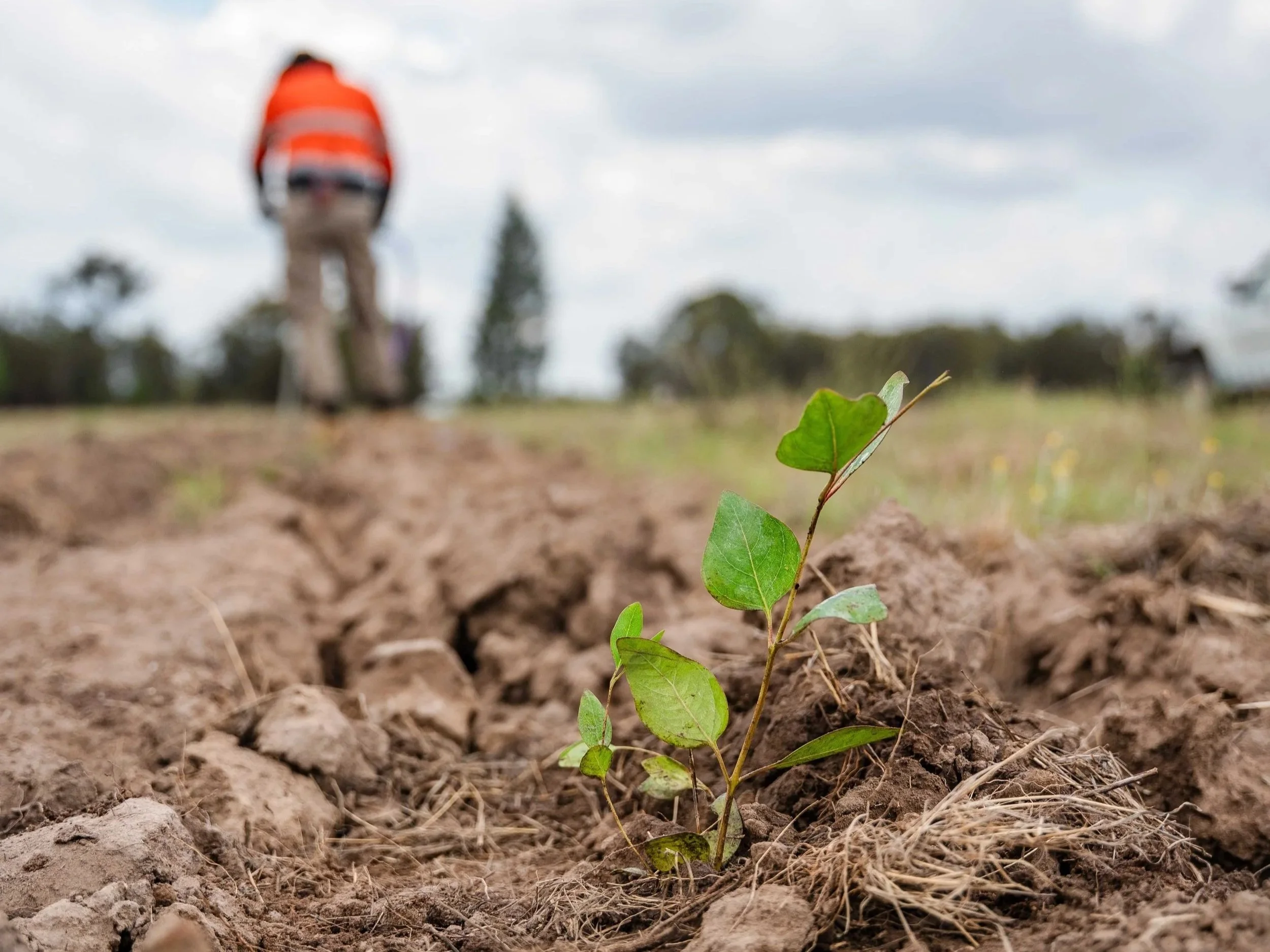
Precision interventions - informed by soil science, hydrology and landscape function deliver more durable outcomes than rapid deployment.
The difference between activity and recovery
Landscape rehabilitation efforts are often measured by visible activity – how many hectares have been treated, the number of seeds deployed, or percentage vegetation cover achieved. These metrics are easy to report and easy to photograph. But they do not necessarily indicate long-term ecological recovery.
A landscape may appear green yet remain dysfunctional.
True recovery requires:
stable soils and functional structure,
hydrological balance and infiltration capacity,
nutrient cycling and biological activity in soils,
habitat complexity and species diversity,
resilience to climatic variability and disturbance.
Without these foundations, revegetation may fail, stall, or require costly rework.
Why rehabilitation efforts fail
Where rehabilitation struggles, the underlying causes are rarely related to planting methods alone. More often, failure stems from unresolved constraints within the soil–water–landscape system.
Common limiting factors include:
-
Compaction, poor structure, salinity, sodicity, extremes in pH or nutrient imbalance can prevent root establishment and long-term growth.
-
Altered drainage patterns, poor infiltration, water holding capacity, or erosion processes can destabilise landscapes and undermine vegetation.
-
In many mine rehabilitation contexts, topsoil deficits require engineered solutions to support plant establishment and ecosystem development.
-
Slope design, erosion pathways and surface roughness influence long-term stability and vegetation success.
Addressing these factors early significantly increases the likelihood of sustainable recovery.
Moving beyond planting metrics
As expectations rise, regulators, investors and communities are increasingly focused on performance outcomes rather than activity metrics.
In reponse, key questions are shifting from:
How much was planted?
to:
Is the ecosystem functioning?
Will it persist without intervention?
Does it meet closure and compliance requirements?
This shift requires a more rigorous approach to monitoring and verification.
Measuring what matters
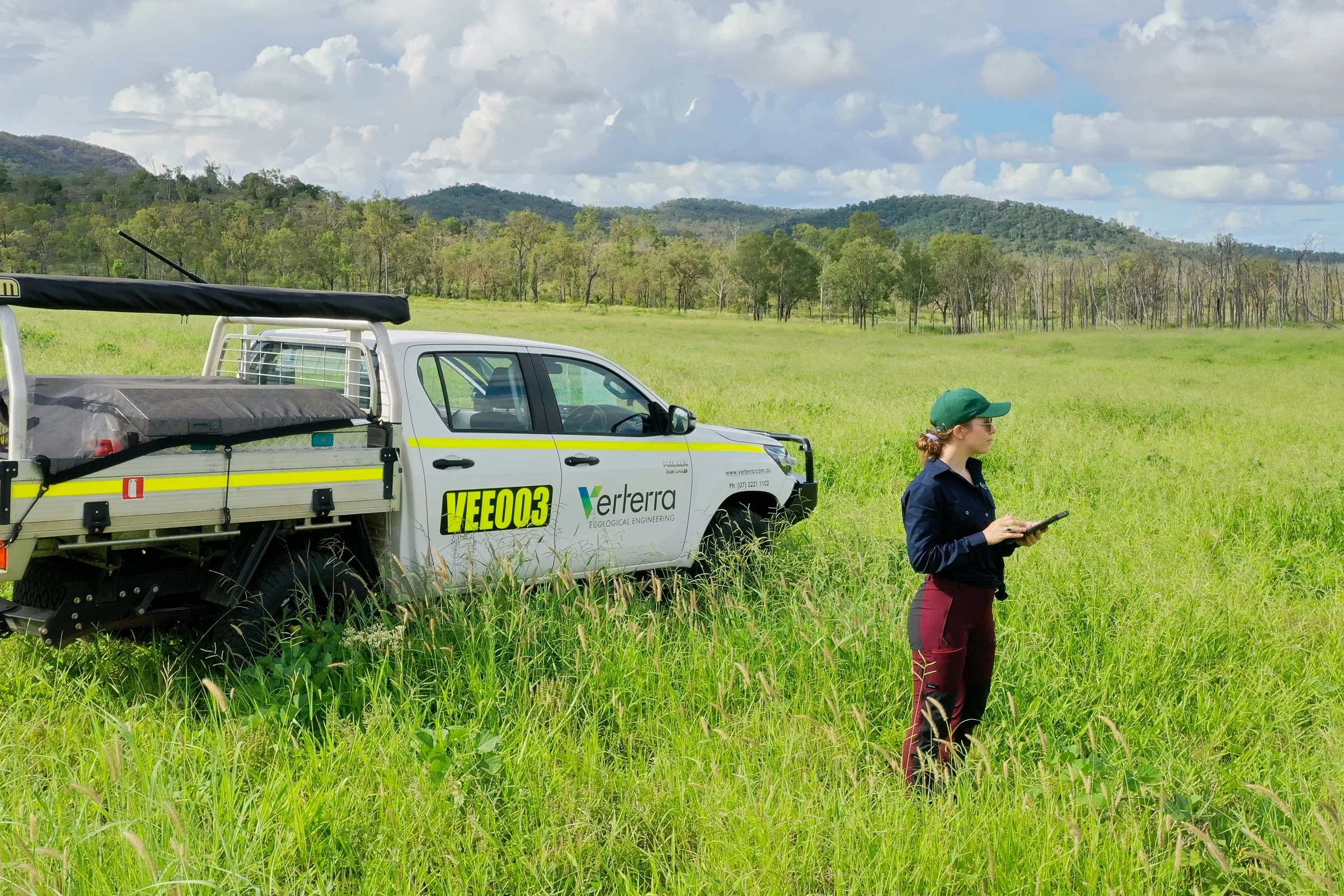
Effective restoration monitoring must integrate vegetation indicators with erosion, soil stability and landscape function metrics to provide a complete picture of rehabilitation trajectory.
Considerations include:
vegetation structure and vigour,
species composition and diversity,
habitat complexity,
soil stability and surface function,
landscape hydrology and erosion risk,
ecosystem performance benchmarks over time.
Performance-based monitoring provides confidence that rehabilitation outcomes are progressing toward closure objectives and regulatory requirements.
Precision intervention over rapid deployment
Rapid deployment methods can be effective in certain contexts, particularly where access is limited or scale is significant. However, speed alone does not guarantee success.
In many cases, precision intervention - informed by soil science, hydrology and landscape function - delivers more durable outcomes and reduces long-term risk.
Investing in understanding site constraints before large-scale planting can:
improve vegetation survival rates,
reduce rework and maintenance costs,
accelerate ecosystem stabilisation,
minimise erosion and sediment loss,
support long-term compliance outcomes.
Ultimately, restoration success is determined not by how quickly an area is treated, but by how well it performs over time. (For more on this topic click here)
From restoration to risk reduction
Rehabilitation outcomes carry significant implications for mine closure liability and environmental risk. Failed revegetation, erosion, or ecosystem instability can lead to ongoing maintenance costs, regulatory scrutiny, and reputational impacts.
Conversely, landscapes that demonstrate stable function and ecological resilience:
reduce long-term liability,
support compliance confidence,
strengthen ESG performance,
provide pathways to natural capital value.
Restoration success is therefore not only an environmental objective - it is a risk management strategy.
A performance-based future for restoration
As the industry matures, restoration is evolving from an activity-driven process to a performance-based discipline grounded in ecological function and measurable outcomes.
Technology will continue to support monitoring and implementation. But long-term success depends on integrating ecological engineering, soil science and landscape systems thinking with performance verification.
A structured pathway to restoration success
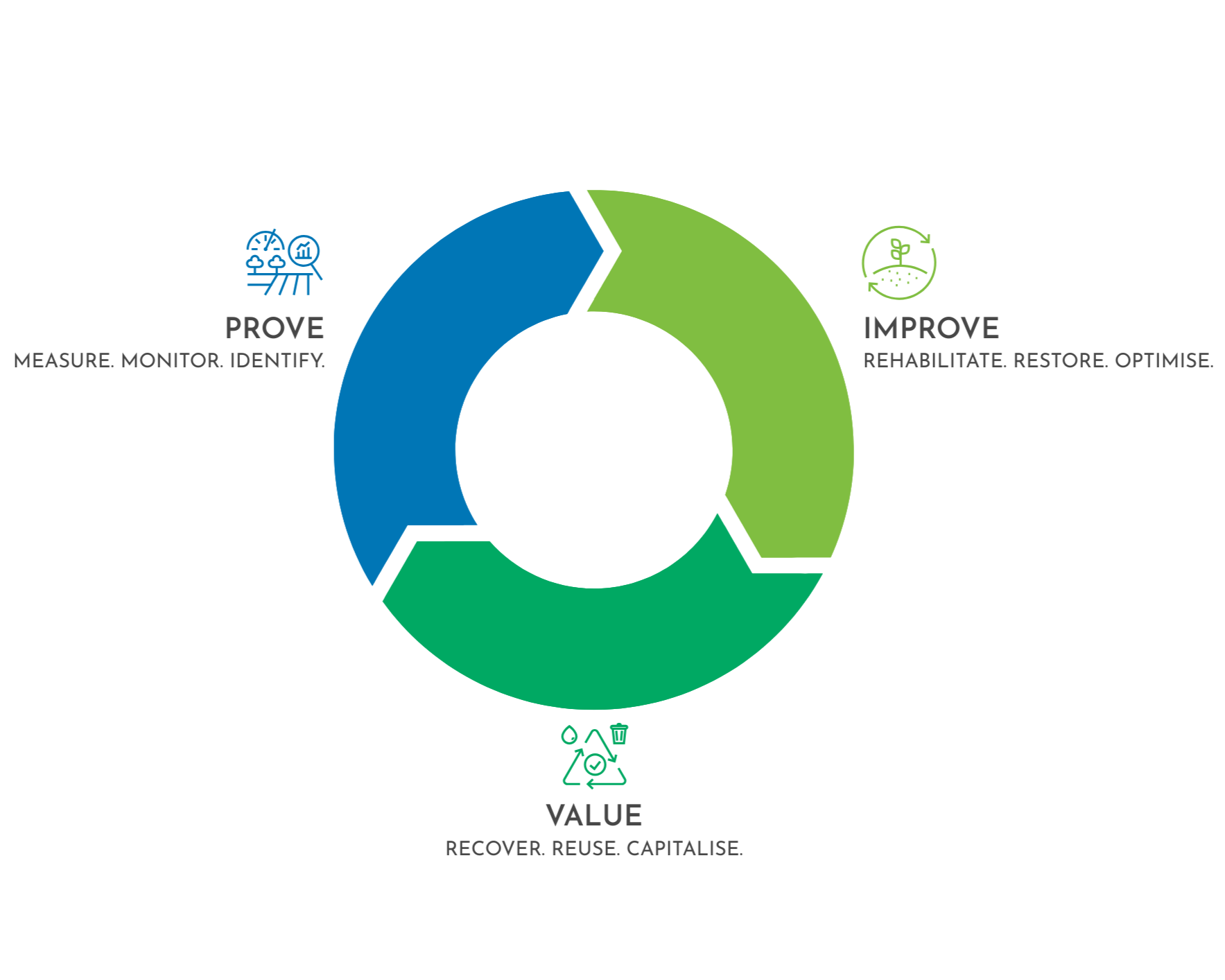
Achieving durable rehabilitation outcomes requires a structured approach that links measurement, targeted intervention and long-term performance outcomes.
Verterra’s Performance Ecosystem provides this pathway:
PROVE — establish a defensible baseline and verify landscape stability, recovery trajectory and environmental performance over time.
IMPROVE — apply targeted ecological engineering, soil and landscape interventions to address constraints and strengthen rehabilitation success.
VALUE — deliver stable, compliant landscapes that reduce closure risk, strengthen ESG performance and support long-term environmental and natural capital outcomes.
By connecting performance intelligence with practical improvement strategies, operators gain clarity, confidence and control over rehabilitation outcomes.
Because restoration success is not achieved through planting alone.
It is achieved when landscapes function, endure and deliver measurable performance.