
The $13k Investment That Can save Millions in Landscape Rehabilitation Delivery
In landscape rehabilitation, success isn’t just determined by what you do, but also when you do it.
Rainfall, soil moisture, wind and temperature all influence whether work can proceed, whether plants establish, and how systems perform over time.
Many projects still rely on distant weather stations or historical averages to guide critical decisions, but in reality, site conditions don’t always match the forecast.
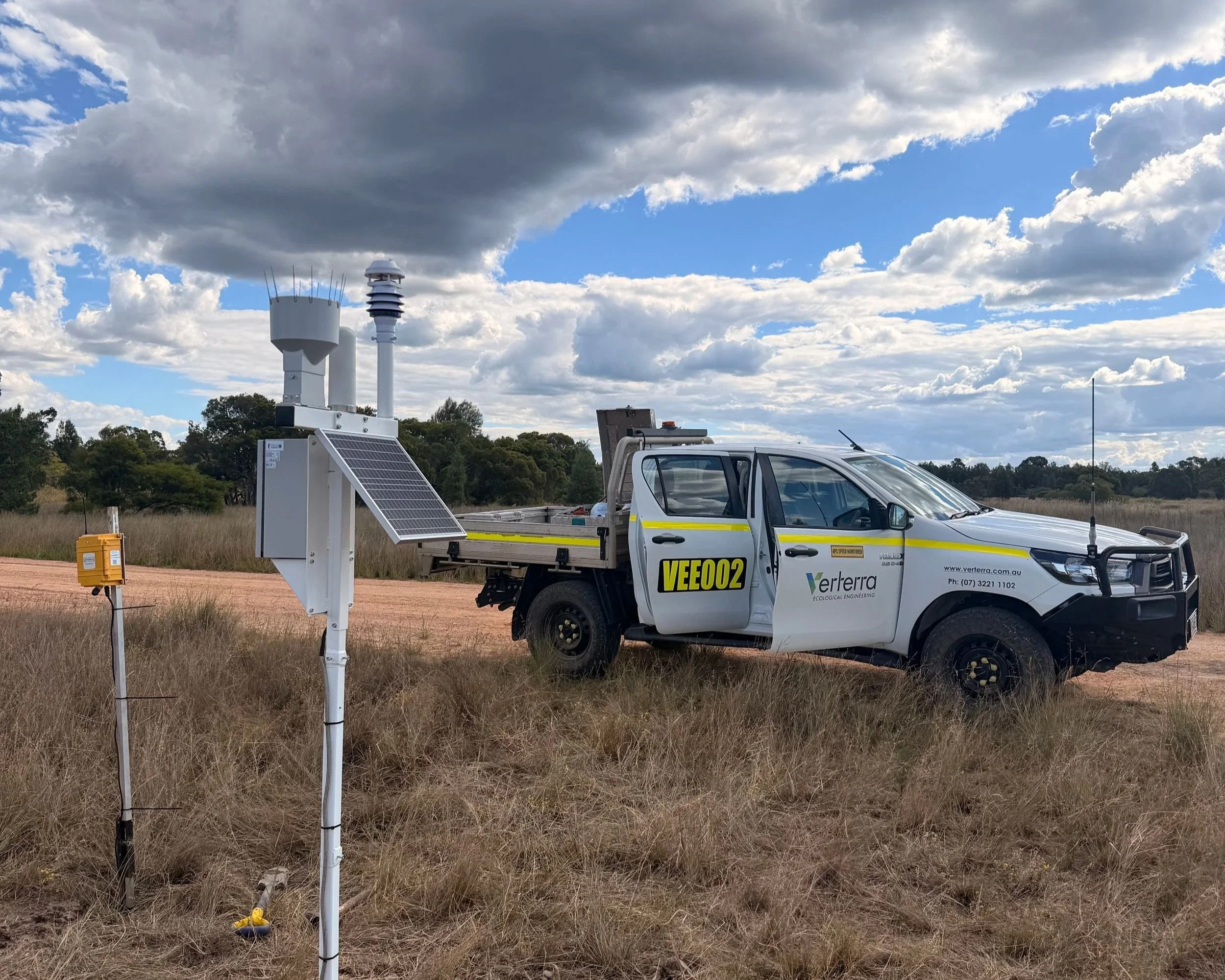
Investment in a weather station has the potential to save millions in costs across the lifetime of a project.
The cost of getting conditions wrong
On rehabilitation projects - particularly when operating in remote locations - timing is everything.
Mobilising crews, equipment and materials to site is expensive. So when conditions aren’t suitable, those costs escalate quickly:
Machinery may arrive but can’t access the site due to rainfall,
Planting could proceed in suboptimal moisture conditions,
Herbicide application windows may be missed due to winds,
Teams might be placed in a holding pattern or even stood down while waiting for conditions to change.
Weather stations operated by the Bureau of Meteorology (BoM) may be tens of kilometres away, and deliver data that is not reflective of the conditions on your site. As a result, in many cases, decisions are made based on incomplete or non-representative data.
From assumptions to site-based intelligence
Installing a site-based weather station changes how rehabilitation projects are planned and delivered. Instead of relying on assumptions, teams can access real-time, location-specific data to guide their decision-making.
This includes:
Rainfall (what actually fell on site and not just nearby)
Wind speed and direction
Soil moisture and temperature
Atmospheric temperature
With this information, rehabilitation becomes more than just a sequence of activities - it becomes a managed system.
Where weather data creates the most value
-
Rainfall directly impacts site access and ground conditions. With accurate, on-site data, teams can:
Assess whether heavy machinery can safely operate
Sequence works more effectively
Avoid unnecessary mobilisation
This reduces downtime, improves efficiency, and lowers delivery costs.
-
The first few months after planting are critical.
Seedling survival is heavily influenced by:
Soil moisture availability
Rainfall timing and intensity
Temperature conditions
A weather station allows teams to track:
How much rain seedlings actually received
Whether conditions are trending toward stress
This ability to monitor live conditions on the ground, shifts planting from a one-off activity to an actively managed establishment phase.
-
Soil moisture is one of the most important (and often least understood), variables in landscape rehabilitation.
By combining weather station data with soil moisture probes, teams can:
Establish thresholds for intervention – such as when to step in and water,
Understand conditions at depth, not just at the surface level,
Make more informed decisions about plant health and performance.
While soil probe measurements don’t capture variability across an entire site, they provide a far better indication than relying on rainfall alone.
-
Weather conditions directly impact operational safety and effectiveness.
For example:
Wind speed influences herbicide application and safety,
Rainfall affects wash-off risk and timing,
Temperature impacts plant stress and chemical performance.
Having real-time data allows teams to identify suitable windows and avoid unnecessary risk.Weather conditions directly impact operational safety and effectiveness.
For example:
Wind speed influences herbicide application and safety,
Rainfall affects wash-off risk and timing,
Temperature impacts plant stress and chemical performance.
Having real-time data allows teams to identify suitable windows and avoid unnecessary risk.
-
For remote projects, the ability to monitor conditions without being on site is a major advantage.
Instead of sending teams out to assess conditions manually, operators can:
Track site conditions remotely,
Make decisions in advance,
Avoid wasted trips and delays.
This is particularly valuable where BoM stations are not close enough to provide reliable insights.
A small investment with a fast return

At cost of roughly $13,000 (including installation and maintenance), a weather station is a relatively small investment in the context of a large-scale rehabilitation project.
When compared to the cost of mobilising crews and equipment, machinery hire and transport, or project delays and rework - it quickly becomes clear that the investment can pay for itself within a single project cycle.
In some cases, avoiding just one failed mobilisation or poorly timed activity can offset the cost entirely.
Simple, scalable, and effective
A single weather station typically provides accurate data across a radius of around 2 kilometres, which means one unit is often sufficient for a project.
When combined with soil moisture probes and on-ground verification to validate data and check soil conditions, it provides a practical, scalable way to improve how rehabilitation is managed.
From delivery to performance
At Verterra, we see weather data as part of a broader shift in landscape rehabilitation.
It’s not just about delivering works - it’s about understanding and managing the conditions that determine whether those works succeed in the long-term.
By integrating site-based data into planning and decision-making, rehabilitation becomes more predictable, efficient and resilient - and ultimately, more likely to deliver the long-term outcomes that projects are designed to achieve.
Better data. Better decisions. Better outcomes.
Whether it’s a mine-site, revegetation project, or a degraded landscape, rehabilitation doesn’t happen in a controlled environment. It happens in dynamic, variable conditions - where timing and responsiveness matter.
Investing in the right data doesn’t just improve efficiency. It improves performance.
If you’re looking to improve rehabilitation planning and performance, get in touch.