
Managing Environmental Risk and Long-Term Site Performance
Services: Environmental risk assessment, erosion stabilisation, leachate modelling, declared weed management, ecological monitoring and estate maintenance
Location: Collinsville, Queensland
Date: Ongoing monitoring commenced 2017
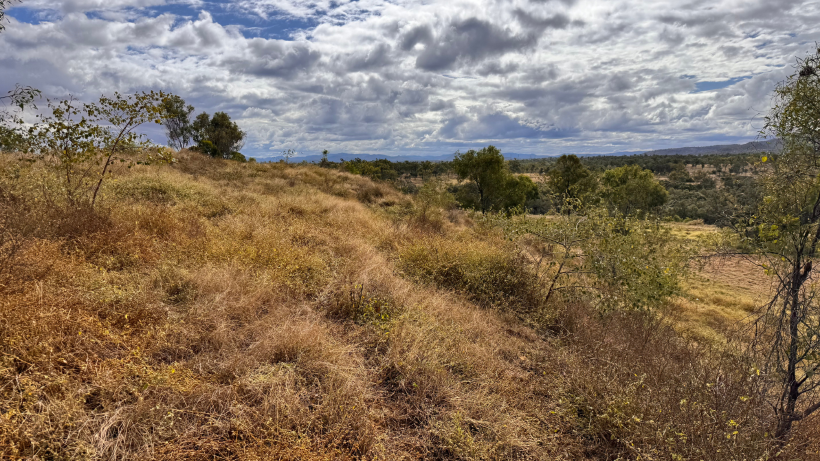
Collinsville Ash Dam
Our Scope
The former Collinsville Power Station estate presented a combination of immediate environmental risks and longer-term closure and property management requirements. Key issues
included moderate to severe erosion across the capped ash mound, declaired weed infestations, and the ongoing management of the broader estate.
Verterra was engaged to develop a practical, evidence-based response to risks and support regulatory approval for ash dam closure (see Case Study: Establishing an evidence-based pathway to QLD’s first regulatory closure of an ash dam), which evolved into a broader estate monitoring and management role.
PROVE
Assessment of environmental risks affecting the ash dam and surrounding power-station estate identified 28 erosion sites of concern across the capped, disused ash mound. These ranged from moderate to severe and presented a risk to the stability of the cap and the movement of sediment from the site.
Weed assessment identified widespread infestations across the ash dam and surrounding property, including species classified at the time as Class 2 and Class 3 declared weeds.
Verterra evaluated their legislative status, distribution, potential to spread and implications for closure and ongoing land management.
As the relationship progressed, condition monitoring was extended across the wider estate. This included ecological condition and authorised-access monitoring to help identify emerging issues and inform ongoing management priorities.
IMPROVE
To stabilise the ash mound, an erosion-control approach was developed combining:
Earth berms and constructed swales to redirect and disperse runoff along low-fall contours
Sediment traps to slow water movement and encourage deposition
Rolled-out hay bales to armour disturbed surfaces
Seeding and fertiliser application to promote rapid pasture establishment
The approach addressed the erosion risk without relying on more extensive and costly engineered treatments.
A risk-based weed-management plan was developed covering:
Legislative and compliance requirements
Weed identification and status
Site-specific weed risks
Control strategies and treatment schedules
Incident-management procedures
Priorities for implementation and follow-up treatment
The plan was supported by practical weed-control activities across the ash dam and surrounding estate.
Dedicated personnel delivered ongoing services including weed control, firebreak construction and maintenance, fencing maintenance, ecological condition monitoring and monitoring of authorised access.
VALUE
Verterra’s practical combination of environmental assessment, targeted remediation and long-term estate management reduced closure risk and delivered erosion controls that remained effective through Cyclone Debbie, including:
Reduced erosion and contamination risk
A stronger evidence base for regulatory engagement
More cost-effective management of environmental liabilities
Continuing oversight of ecological and property condition
A practical pathway towards closure and future land use
Confidence that site performance could be monitored and managed over time
This project demonstrates the value of treating closure as an ongoing performance-management process: first establishing the risks with evidence, then implementing targeted improvements and continuing to protect environmental and asset value through active stewardship.