
Services: Post-mining land-use planning, native forestry trial design, revegetation management planning and regulatory engagement
Location: Tarong, Queensland
Date: 2013 - 2014
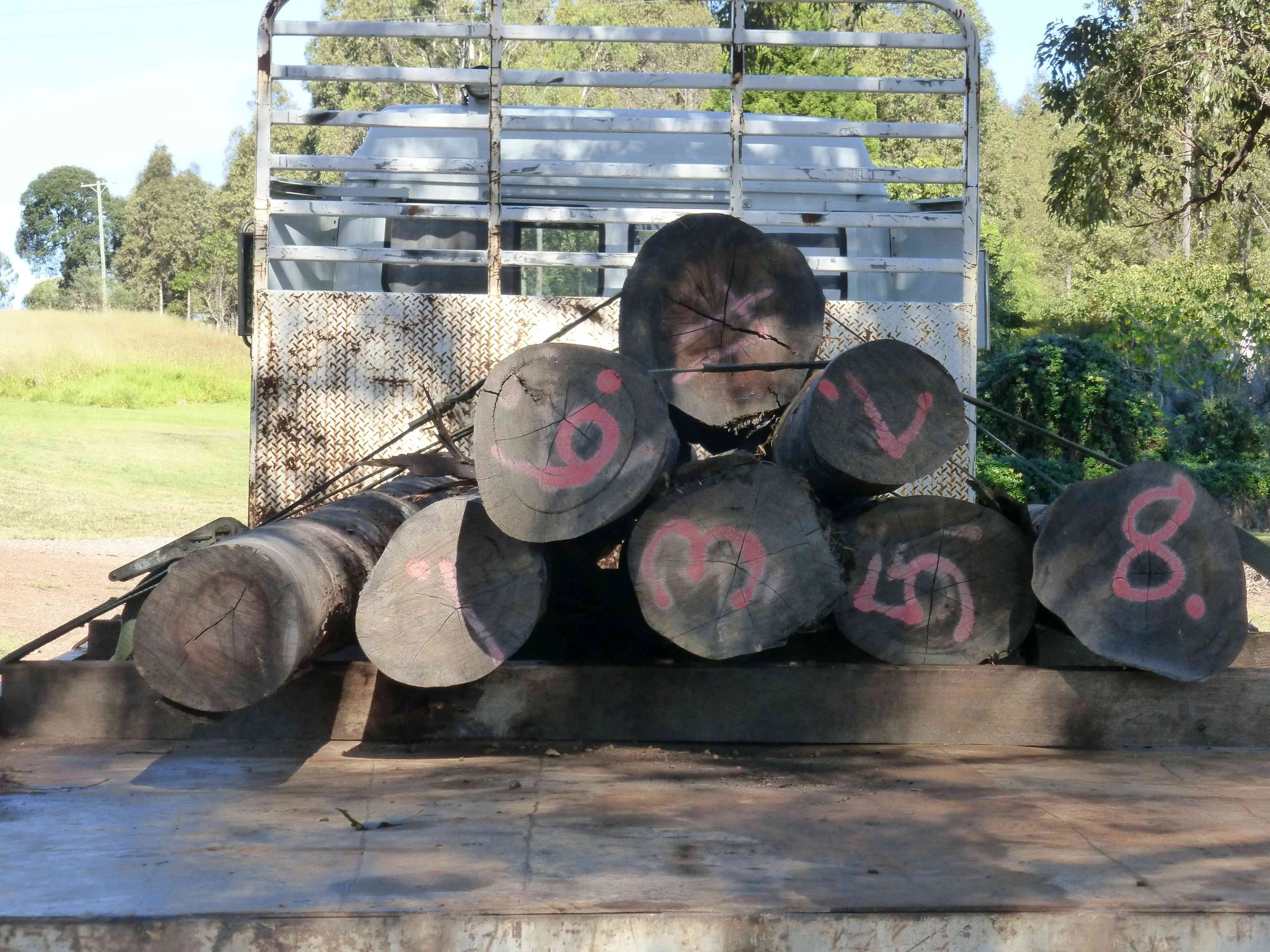
Harvested timber from the native forestry trials
Our Scope
Mine rehabilitation commonly focuses on establishing native vegetation. While this can meet environmental objectives, it may not always create a clear incentive for active, long-term land management after mining ends.
Commercial forestry offered potential as an asset of continuing value, but it was not the regulator’s preferred rehabilitation outcome from a biodiversity perspective. Verterra worked with the client to develop a science-based trial to demonstrate how native forestry could support both biodiversity and commercial timber production long-term.
The aim was develop a productive use that could attract an active long-term land manager, support regional economic and community benefits and provide visible evidence that the rehabilitated landscape was stable and functional.
PROVE
The first challenge was to establish a credible scientific and regulatory case for testing productive forestry as a post-mining land use. A trial concept was developed to examine the relationship between tree stocking, forest development and potential stem volume. This was important because the initial density and composition of a forest influences its ecological characteristics and its future commercial productivity.
The approach had to demonstrate that commercial objectives would not displace the environmental purpose of rehabilitation.
The proposed forest would need to:
Establish a stable and sustainable vegetation community
Include native species suited to the local environment
Retain environmental diversity
Support the intended post-mining land capability
Provide a potential future timber resource
Create an incentive for continuing management after mine closure
By presenting the proposal as a controlled research trial, supported by an understanding of forest development and management, Verterra helped the client to address regulatory concerns about introducing a commercial objective into mine rehabilitation and supported regulatory approval for the trial to proceed.
IMPROVE
A series of research trials were design for implementation. Rather than establishing a conventional single-purpose plantation, the approach centred on a mixed-species native forest designed to balance ecological diversity with the potential for commercial timber production.
The trial framework tested the concept at an appropriate scale before considering broader application across rehabilitated mining areas. Revegetation management planning considered how forest structure and stocking could be managed over time to support both rehabilitation and productive land-use objectives.
The trials were designed to build practical knowledge about:
Establishing mixed native tree species on rehabilitated mine land
Balancing biodiversity and commercial productivity
The influence of stocking density on forest development
Changes in stem volume as the forest matures
Management requirements associated with a productive native forest
The potential compatibility of forestry with mine-closure objectives
This research-led approach allowed the client to explore an alternative final land use while managing technical, environmental and regulatory uncertainty.
VALUE
The project value extended beyond the potential production of commercial timber to establish an economically useful post-mining landscape that could create an industry incentive for active management after closure, helping ensure that vegetation condition, fire risk, access and forest health continued to be managed over time.
The trial offered the potential to:
Convert rehabilitated mining land into a productive community asset
Maintain native vegetation and biodiversity values
Support regional forestry activity and future employment
Provide a clear long-term land-management purpose
Demonstrate that the rehabilitated landscape was stable and functional
Strengthen confidence in the achievement of closure objectives
Improve social licence by creating value beyond regulatory compliance
Most importantly, the project reframed mine rehabilitation as more than the establishment of vegetation. It demonstrated how post-mining land-use planning could consider who would manage the landscape, why they would continue to invest in it and what enduring value it could provide.