
Why the Future of Natural Capital Investment Depends on Best and Highest Land Use
Natural capital investment is accelerating globally. The Taskforce for Nature-Related Financial Disclosures (TNFD) and climate-related reporting frameworks are increasing corporate demand for credible ecosystem outcomes and nature-positive investment. But as investment grows, an important question is emerging:
What actually makes landscapes perform over the long term?
Not just financially, but ecologically, operationally, socially and economically.
Because long-term value is not created by isolated projects. It is created by landscapes that function as integrated systems, delivering diversified revenue streams and strong financial returns, while improving landscape function, biodiversity and catchment health.
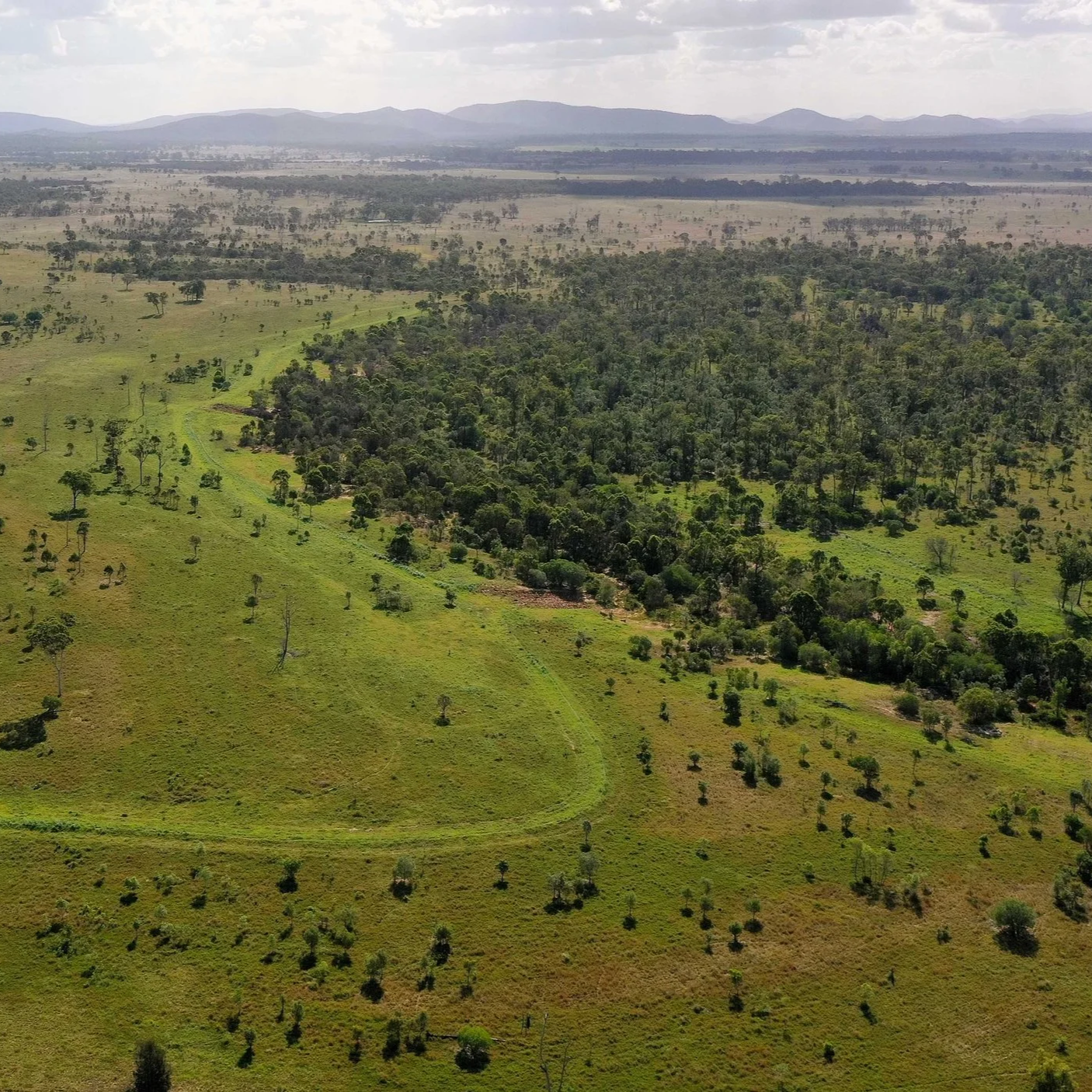
Long-term value is not created by isolated projects, it is created by landscapes that function as integrated systems.
Moving Beyond Single-Use Thinking
Historically, landscapes have been managed around a single commodity, environmental outcome or a single market opportunity. Under pressure to extract as much value as possible, many landholders have previously found themselves forced to overgraze to meet ever-reducing margins. While early opportunities in carbon markets led to the perception that landholders had to choose between grazing or storing carbon.
But landscapes are not single-function assets – they are interconnected ecological and economic systems, which if used well, can support multiple functions and multiple revenue streams.
Managing land should not be about maximum extraction, it should focus on understanding the landscape and designing the optimal combination of commercial productivity and ecological function that is tailored to the landscape. At Verterra we call it achieving the ‘best and highest’ use of the landscape.
The Strongest Landscapes are Mixed Use Landscapes
High-performing landscapes are rarely those dedicated to a single outcome. More often, they are landscapes where different land uses are strategically integrated according to the capability of the land itself. We see this often in single-use systems such a cropping, where over time, soil deficiencies require higher chemical inputs and the landscape becomes less resilient.
By better understanding the landscape functionality, we can identify highly productive areas which may be best suited to regenerative grazing or sustainable cropping systems. Other areas may deliver greater long-term value through plantation forestry, environmental plantings, biodiversity restoration, also contributing to water quality improvement. In some cases, degraded or erosion-prone areas may generate strong economic and environmental returns when restored to improve catchment function and landscape resilience.
When these land uses are planned together, rather than in competition with one another, landscapes become more productive, more resilient and more commercially diverse.
This is where natural capital investment is beginning to evolve.
The conversation needs to move beyond single-market opportunities, toward integrated, internally self-reinforcing landscape systems capable of generating multiple forms of value simultaneously:
productive agricultural output,
carbon sequestration,
biodiversity,
water quality improvements,
timber and forestry production,
ecosystem service markets,
and long-term land appreciation.
Rather than reducing productivity, strategic environmental restoration can improve the long-term capability of the landscape itself by stabilising soils, improving water retention, reducing erosion and supporting ecosystem function.
In this sense, environmental performance should not be viewed as separate from commercial performance. The two are increasingly interconnected.
Healthy landscapes are also productive landscapes.
Why Ecological Function Drives Commercial Performance
For decades, environmental outcomes have often been treated as externalities - important, but separate from the core drivers of economic performance. Ironically, this approach ignores a core economic theory that identifies land as a factor of production. But now, this is now changing rapidly.
As climate variability, water security, soil degradation and biodiversity loss increasingly affect agricultural productivity and asset resilience, ecological function is becoming recognised as a form of foundational infrastructure underpinning long-term land value.
Healthy soils support productive capacity.
Functional water systems improve drought resilience and reduce erosion.
Vegetation stabilises landscapes and improves habitat connectivity.
Biodiversity contributes to ecosystem resilience and adaptive capacity.
When these systems break down, productivity and asset performance are inevitably affected, and this is why the future of natural capital investment cannot simply focus on extracting value from environmental markets alone. It must focus on improving the long-term function and capability of the landscape itself.
Single-focus markets may help fund the transition, but ecological performance is what ultimately determines whether landscapes continue to generate value over time. And that’s where environmental performance intelligence comes in.
Measuring What Matters
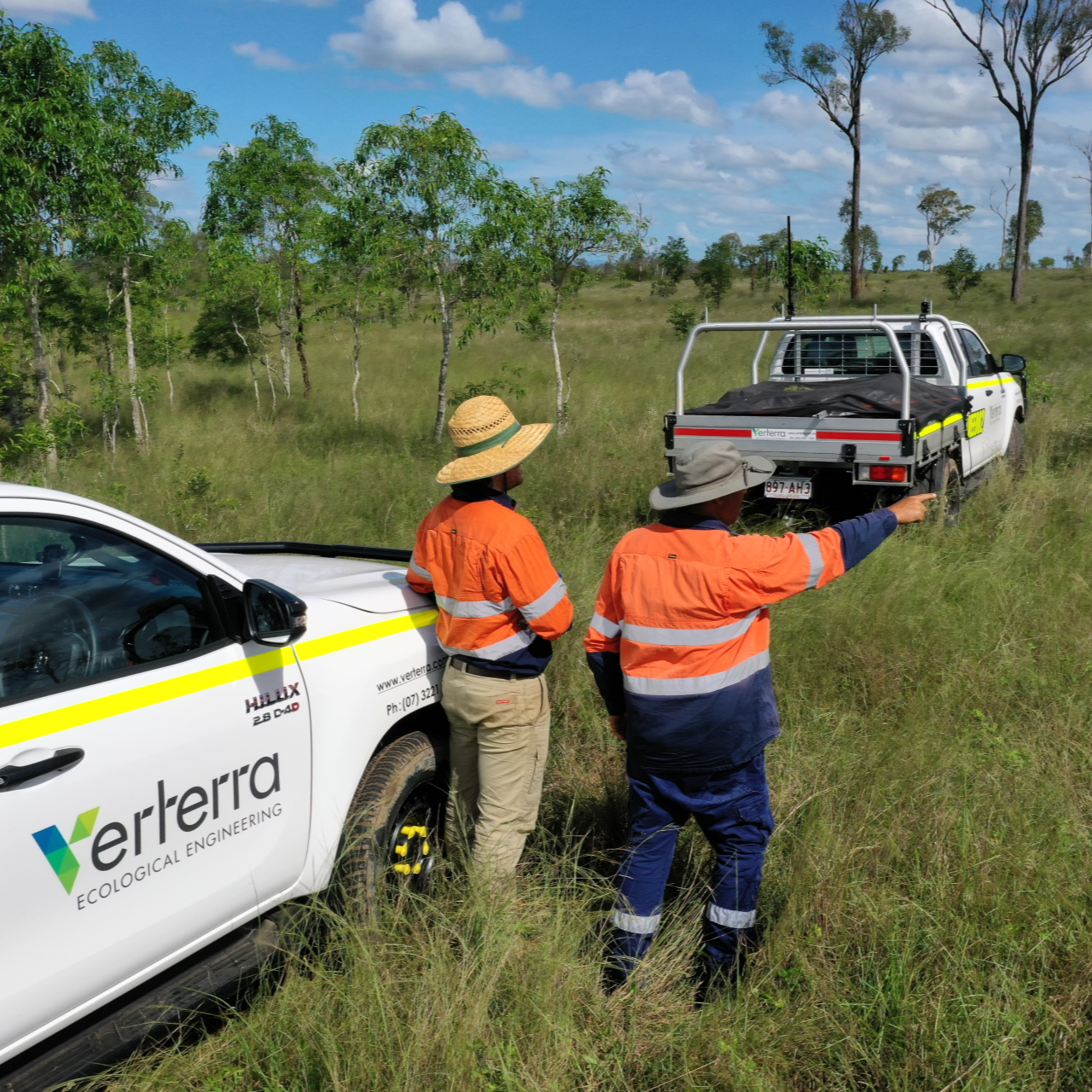
As natural capital investment matures, measurement and verification of environmental performance will become increasingly important.
Institutional investors, governments and corporations are all seeking greater confidence that environmental outcomes are credible, measurable and durable.
But measuring landscape performance requires more than simply counting trees or estimating carbon volumes. The more important question is:
Will this landscape function better in 10 years because of the actions being implemented today?
That means understanding:
are soils are improving;
is water infiltrating and moving effectively;
are vegetation systems self-sustaining,
is biodiversity and habitat function returning; and
is productive capacity being maintained or enhanced over time.
Without this level of performance verification, it becomes difficult to distinguish between short-term activity and genuine long-term landscape improvement.
This is why measurement is central to the future of natural capital investment. Because if landscape performance cannot be measured and defended, long-term value cannot be properly understood.
Designing Landscapes That Perform
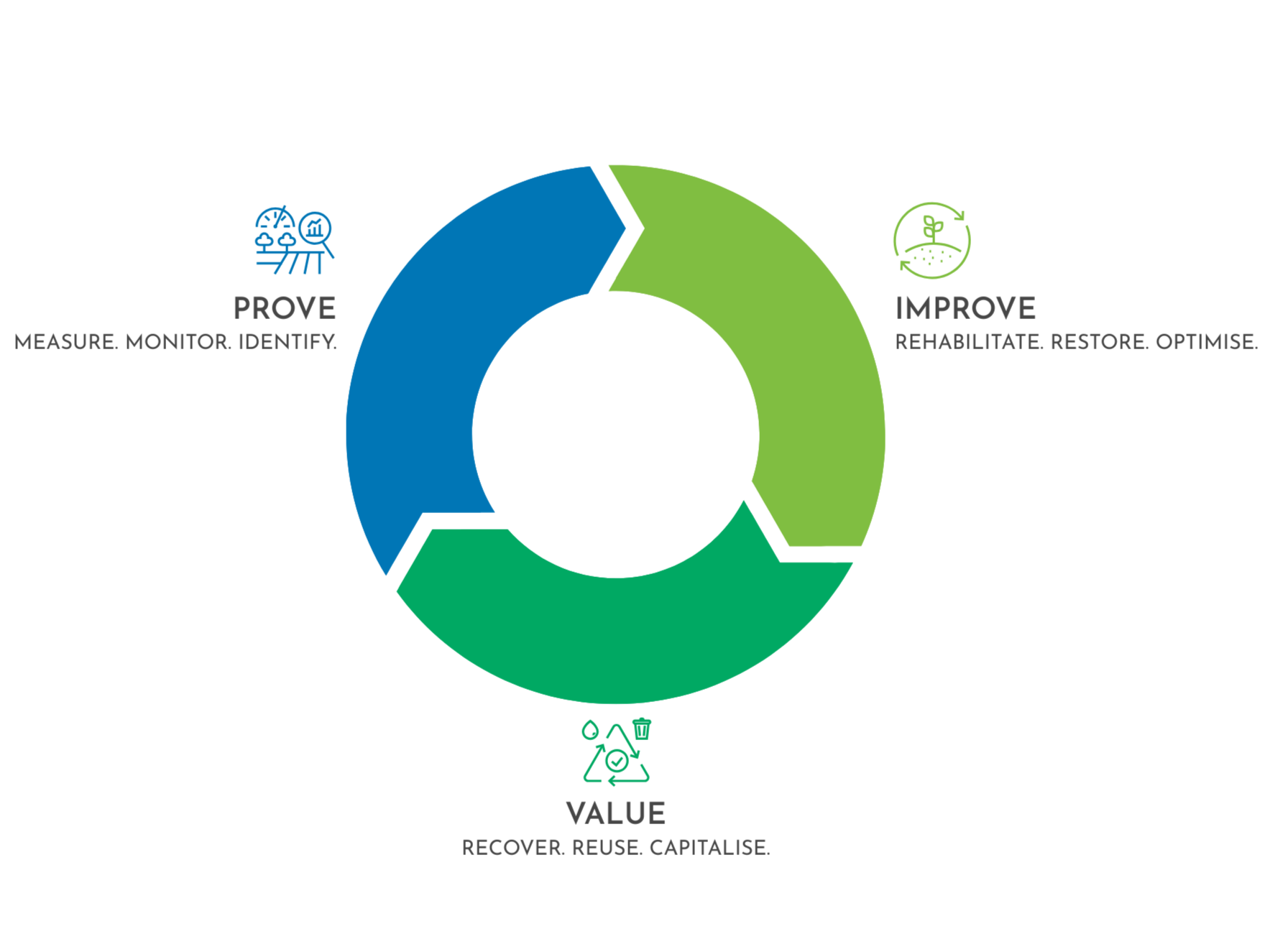
At Verterra, we believe the future of natural capital lies in designing landscapes where ecological and commercial performance reinforce one another.
Through our PROVE–IMPROVE–VALUE Performance Ecosystem, we work to understand the capability and constraints of landscapes, optimise land use across multiple functions and verify long-term outcomes over time.
That means combining:
ecological engineering;
land capability assessment;
environmental performance monitoring;
restoration planning;
forestry and agricultural integration; and
ecosystem market expertise.
By doing this, we can create landscapes capable of delivering both resilient environmental outcomes and diversified commercial returns.
Because the future of natural capital will not be built on isolated projects or single-market opportunities. It will be built on landscapes that function ecologically, perform commercially, adapt over time and create measurable long-term value.
The question is no longer simply: “How do we fund environmental outcomes?”
It is: “How do we design landscapes that perform?”
To find out more, visit us at The Global AgInvesting Conference on 10-11 June in Brisbane,