
Among other things, forests produce timber, store carbon, support biodiversity, influence the condition of soils and provide healthy catchments. In addition, they form a tangible link with nature as source of visual amenity, recreation and wellbeing. Recognising these benefits together can change how we assess the value of forestry and decide where to invest.
That was the focus of Verterra Managing Director Dr Glenn Dale’s session at Forestry Australia’s Forest Growers Plantation Hardwoods Tour. Held from 19–24 October 2026 in southeast Queensland and led by Neil Halpin and Kevin Harding, the tour brought practical forestry management into the discussion about carbon, nature and environmental value.
Invited to speak about carbon, Glenn used the opportunity to explore a broader question: what happens when we start quantifying and recognising the economic value of the broader outcomes that good foresters and land managers have been delivering for decades?
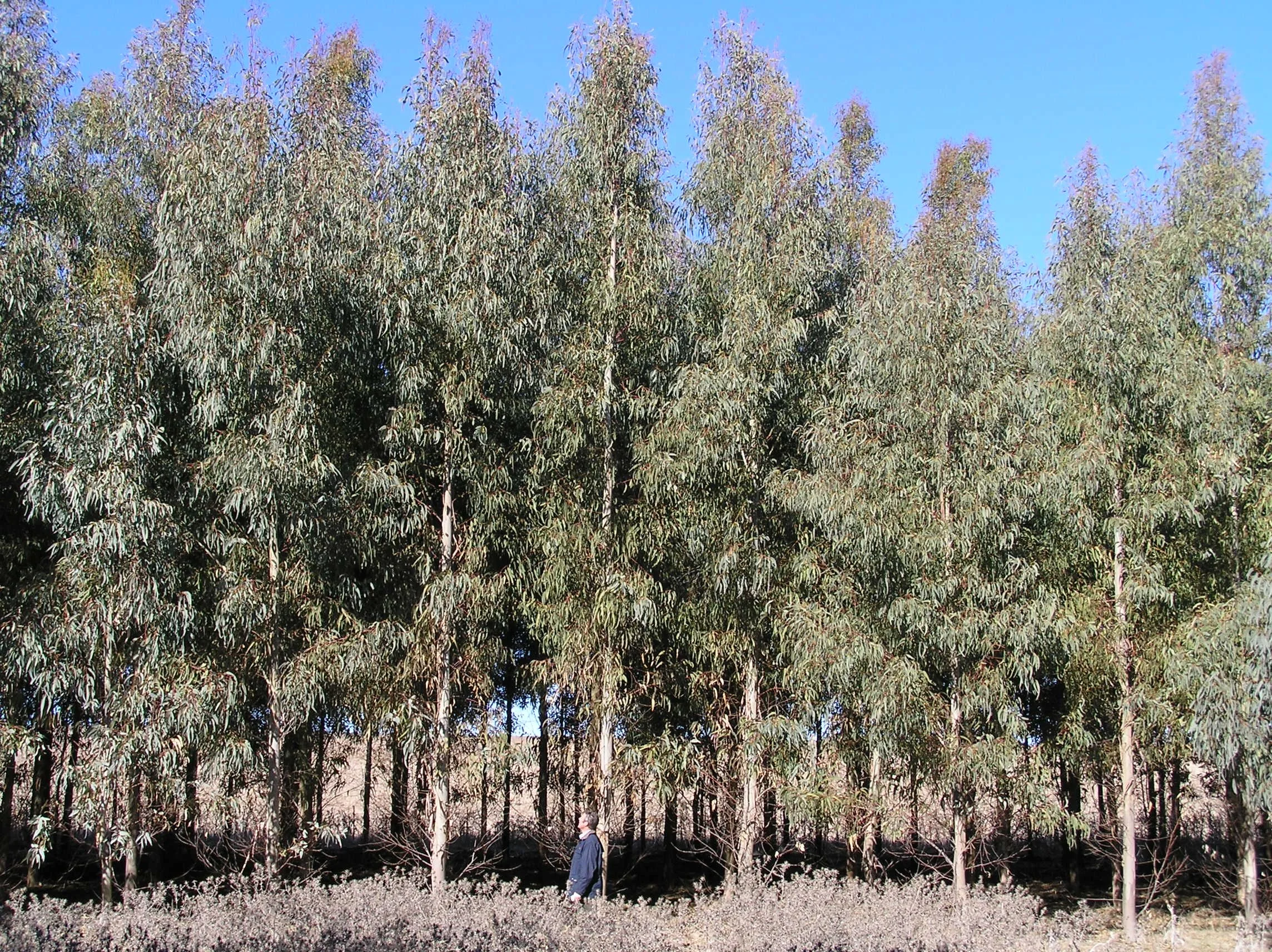
Well run native hardwood forests provide multiple environmental and economic outcomes
Good forestry delivers carbon sequestration
Methods under the Australian Carbon Credit Unit (ACCU) Scheme, such as the plantation forestry method or environmental plantings method, set out how eligible projects calculate carbon abatement and earn credits. But forest performance still depends on the fundamentals: matching species and genetics to the site, establishing healthy trees, managing stocking and maintaining growth through drought, fire and other risks.
Differences in soils, species, rainfall and management history influence what a plantation can deliver. FullCAM carbon modelling cannot substitute for understanding these forestry fundamentals. Trees respond to site conditions, not spreadsheets. Viable carbon projects need forests that can establish, grow and remain productive over the long term within the context of their conditions.
For landholders considering carbon opportunities, the starting point should not be the carbon modelling – it should be the land itself: what can it support, what management will it need, and how will that affect both environmental outcomes and commercial performance?
Understanding the value of the whole landscape
The introduction of carbon to the traditional forestry equation of land + trees = wood, has broadened access to new income streams. Today, the equation has grown to incorporate land + trees = wood + carbon + biodiversity + grazing + soil and water outcomes + more.
This doesn’t mean every tree now has five revenue streams, but it does mean we need to start quantifying the productive landscape, rather than simply the standing timber.
The phrase ‘natural capital’ describes the natural assets that underpin commercial production and provide environmental benefits, including forests, soils, water and biodiversity.
For forestry, this broadens the investment question. Alongside the commercial value of the timber, landholders can consider how trees contribute to grazing landscapes, carbon storage, natural habitat, erosion management and water quality.
The tour program’s inclusion of the Steak ’n Wood research project at Queensland’s Brian Pastures Research Facility illustrated this wider perspective. The project examines how trees and livestock can be integrated, and considers commercial productivity, carbon sequestration, financial performance and environmental benefits.
The reality is that different parts of a property will have different capabilities. Productive forestry may suit one area, while another supports grazing. Riparian areas may be particularly important for biodiversity and habitat connectivity, as well as streambank stability and water quality. Other areas may be better suited to landscape restoration.
The opportunity for landholders is to plan these uses together, considering their combined contribution to the property’s long-term performance and resilience.
Separating environmental value and market income
A landscape can deliver several environmental benefits without generating a separate revenue stream for each one.
Carbon and biodiversity projects depend heavily on the rules of the relevant scheme, the activities proposed under those rules, and the ability of the landholder to demonstrate eligible outcomes. Each scheme defines which outcomes it recognises and how they must be measured. In practice, those outcomes are interconnected: the same management actions can influence carbon storage, biodiversity, soils and water.
Australia’s Nature Repair Market provides a pathway for eligible restoration projects to apply for a biodiversity certificate under approved methods. Eligibility depends on the activities, site and requirements of that method; a plantation’s biodiversity benefits do not automatically make it eligible. Measuring those benefits also presents different challenges to carbon accounting.
Carbon accounting uses a common unit of tonnes of carbon dioxide equivalent, whereas the ecological outcomes required to demonstrate biodiversity improvement depend on local conditions, species, habitat and the relationships between them. Nature does not fit easily into a standardised unit.
Any environmental market opportunity from carbon to biodiversity and everything in between, needs to answer three key questions:
What exactly are we creating?
How do we measure it to demonstrate that it is additional and real?
Who will buy it, and why?
Where several markets are being explored, the requirements of each market scheme need to be assessed together from the outset. The ability to measure multiple benefits is only the first step towards determining whether compatible, commercially viable revenue opportunities exist. Additionality requirements and project design under the rules of each scheme must also be considered.
It’s worth remembering that the delivery of non-commercialised environmental benefits can still matter to the core business. Better soil condition, reduced erosion and more resilient vegetation can support long-term productivity and reduce management pressures. Those outcomes belong in the assessment of a property’s value, even where they do not produce a tradeable credit.
Fundamentally, what landholders need to establish is the best and highest value use of the whole landscape – economically, socially and environmentally.
A practical example – the Halpin Plantation
Neil Halpin’s own plantation provides a useful example of how different value streams can develop together across one landscape.
Established in 2007, the 35-hectare hardwood plantation combines several tree species with rotational cattle grazing. Its management includes retaining and managing coppice regrowth and seedlings, with periodic harvesting envisaged as an alternative to clear-felling.
Today, its development from a bare paddock towards a forest containing multiple species and age classes that combine timber production and grazing with enhanced habitat value would be called “an integrated, multi-asset natural capital strategy”. Back in 2007, Neil would have likely called it “not wasting a perfectly good paddock”.
At its heart, good forestry is about understanding the ecosystem and man
aging the landscape to maintain and enhance natural capital over the long-term.
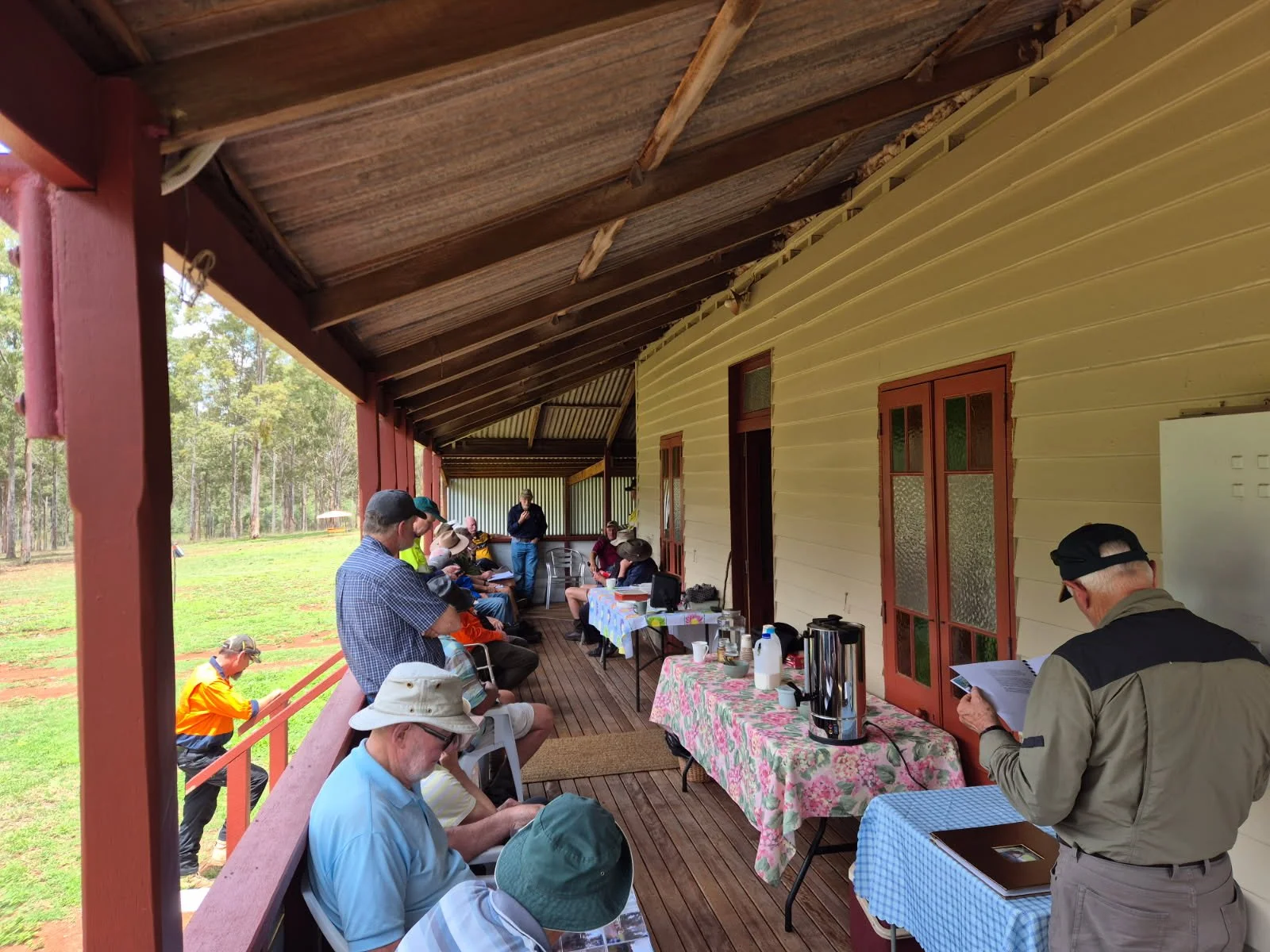
Image: Verterra’s Dr Glenn Dale presenting to the group during the tour.
This approach has informed Verterra and GreenCollar’s proposed Ecoforestry carbon method idea. Mark Jackson of The Carbon Store has also developed a closely aligned proposal.
The Ecoforestry proposal seeks to recognise the environmental benefits of mixed-species, multi-age forests managed for ongoing timber production. It suggests that carbon income could help offset establishment costs of the forest in the early years, while recurring timber revenue provides a commercial reason to maintain the forest over the long term.
If adopted, the method could help address the funding gap in projects with a 25-year crediting period and a 100-year permanence obligation, by supporting ongoing forest management through recurring timber revenue.
At this stage, Ecoforestry is a proposed method idea rather than an approved crediting pathway. However, it highlights an important design question: how can environmental markets recognise productive forestry systems that also maintain carbon and ecological value over time?
Read more about the proposed Ecoforestry approach here.
Building on forestry expertise
Foresters already bring many of the skills needed to assess natural capital: baseline measurement, inventory, growth modelling, risk management and monitoring over decades. Not to mention the rare ability to think and plan 30 years ahead for a future harvest.
Applying those skills across a wider range of outcomes can help landholders understand where forestry fits within any property, what benefits can be demonstrated, and which opportunities justify investment.
For Verterra, this connects ecological engineering with practical land management: understanding site constraints, designing suitable interventions, measuring how the landscape responds and valuing the outcomes.
The opportunity is to use a fuller understanding of forest value to support productive, resilient landscapes and informed investment in their future. For farm forestry and agroforestry enterprises, this means assessing how timber, livestock and environmental outcomes contribute to the performance of the property as a whole.
To explore how forestry and natural capital opportunities could fit your property or land portfolio, speak with Verterra’s ReValue Ecosystems team.