
Designing the Performance Ecosystem: How Natural Capital Can Balance Profit and Planet
By Dr Glenn Dale, Founder & Managing Director, Verterra Ecological Engineering
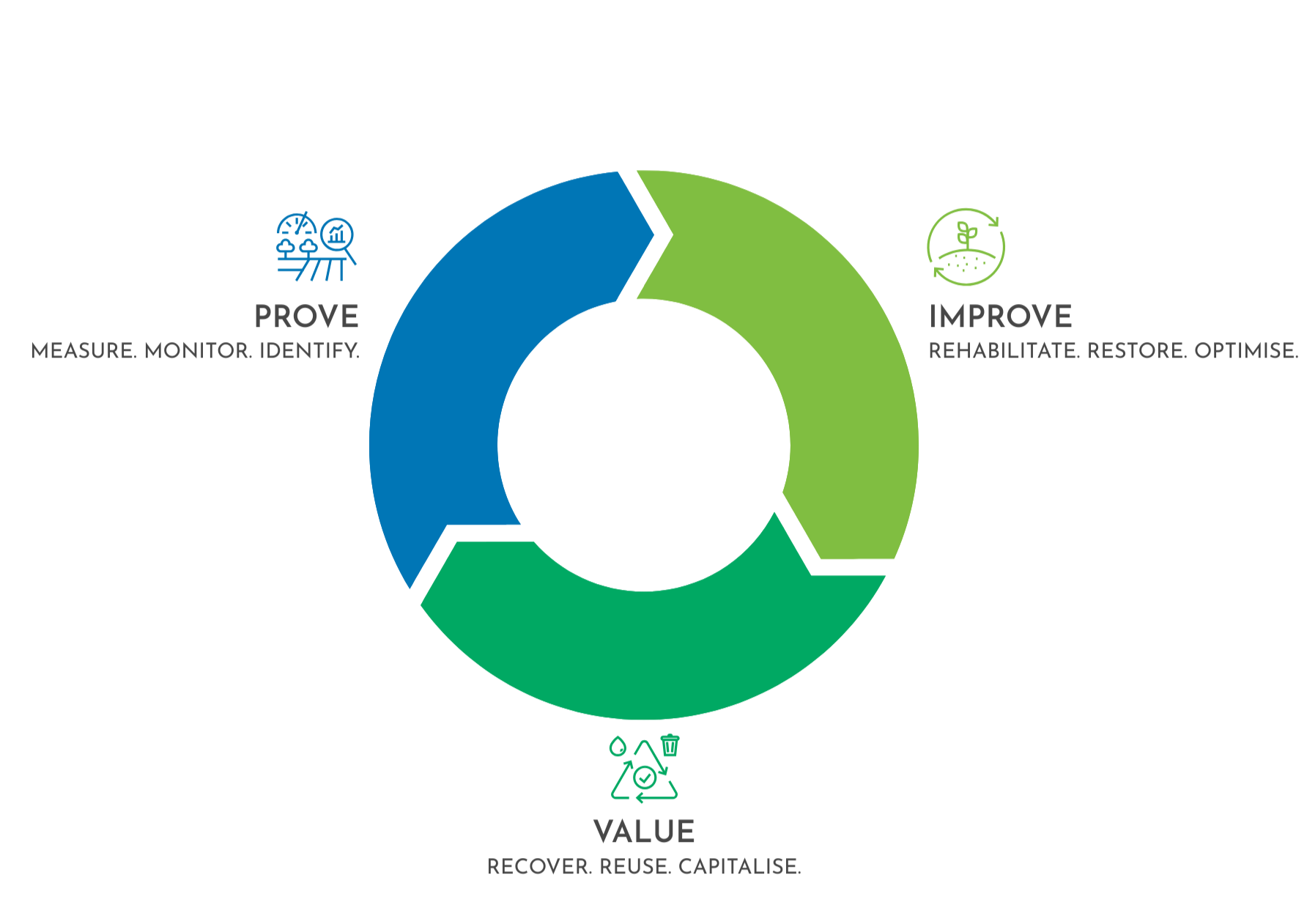
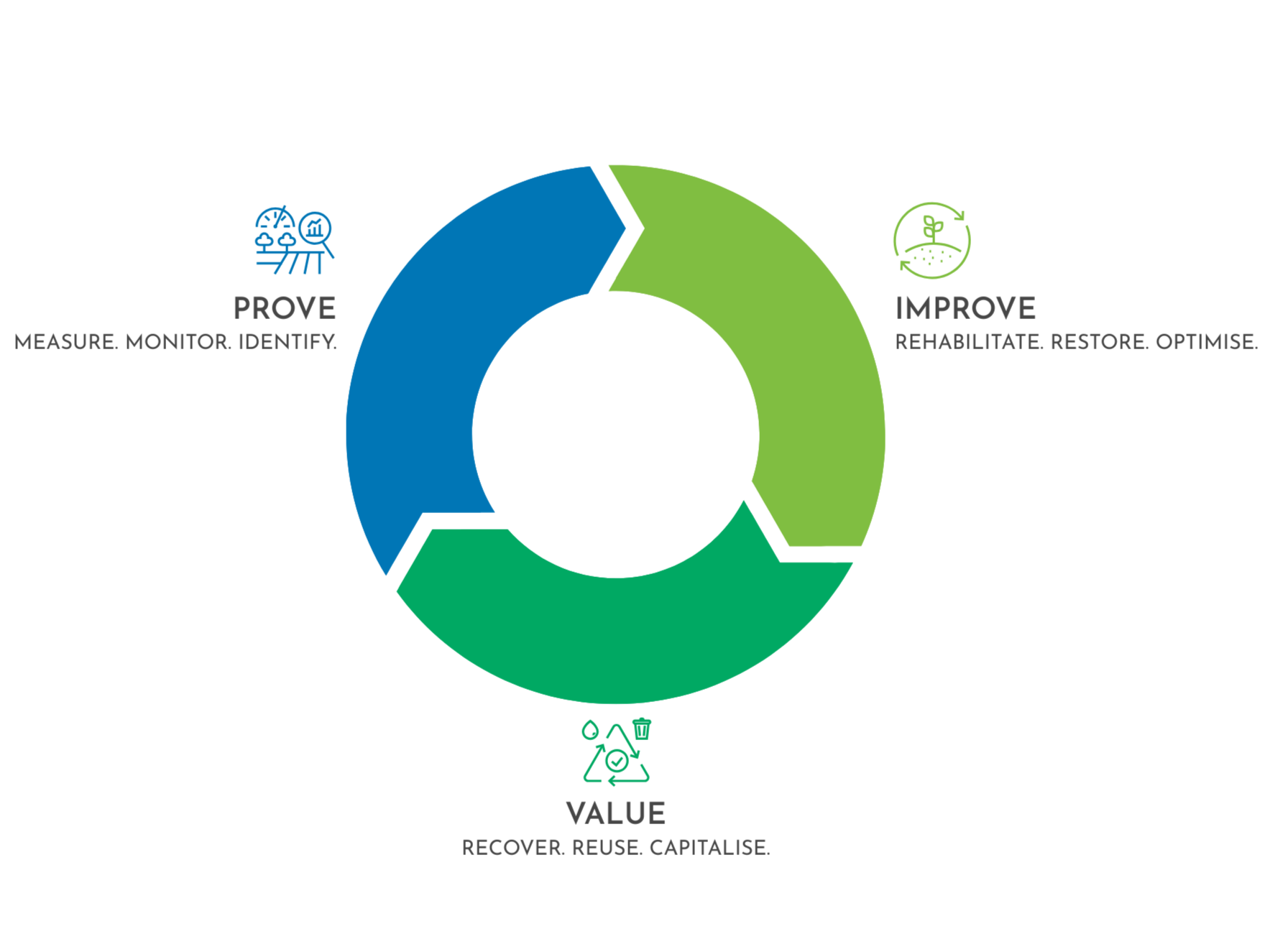
Verterra’s Performance Ecosystem: a framework that integrates commercial and ecological outcomes through PROVE, IMPROVE and VALUE stages.
The new frontier of value
There is a quiet revolution underway in how we define economic value for rural land.
Across the investment world, the term natural capital — once confined to academic papers and policy roundtables — is now being spoken in the same breath as infrastructure assets. It represents a profound shift in mindset: recognising that nature is not just scenery or sentiment, but capital - productive, measurable, and essential to every other form of wealth. It recognises that the economy is not separate from nature, but exists within nature, and sustaining the environment around us that supports the economy means putting a value on it.
The 2024 BlackRock Investment Institute report, Capital at Risk: Nature Through an Investment Lens, called natural capital a “systemic investment factor,” highlighting how soil degradation, water stress and biodiversity loss are beginning to influence asset prices and risk commercial premiums. In other words, markets are starting to price what ecologists have long known: that when ecosystems fail, economies follow.
Despite traditional economic theory recognising “land” (natural resources) as one of the primary factors of economic production, for decades, business models have extracted from the landscape as if it were an infinite resource. Now, as investors seek returns that are both resilient and responsible, attention is turning to how we might design landscapes that generate value by restoring, not depleting, the systems they depend on.
This is where ecological engineering comes in — and where Verterra has quietly built a blueprint for the next generation of natural-capital investing.
From resource extraction to ecological performance
Traditional agricultural and industrial systems have measured success in tonnes, yields or quarterly profit. The consequence has been predictable: eroded soils, polluted waterways and declining biodiversity - problems that Australian farmers are being left to fix in the face of increasing input costs and falling returns.
Numerous reports estimate that modern agriculture, through intensive farming systems and use of mineral fertilisers, has depleted natural soil carbon levels from an average of around 2% to 1%, a decline in soil carbon of up to 50%. This soil carbon loss represents a decline in natural capital – we are effectively mining the soils on which global agricultural production depends.
Natural-capital investing inverts that equation. Instead of asking how much can we take from the land? It asks how can the land perform better when managed as a living system – how can we increase the capital on which production depends in the same way you would think about increasing the capital in your bank account?
At Verterra, our work is guided by what we call the Verterra Performance Ecosystem — a framework that integrates commercial and ecological outcomes through three interlocking stages: PROVE, IMPROVE and VALUE. It’s both a philosophy and a process — a way to turn environmental integrity into an investable metric.
PROVE — Quantifying nature as an asset
Investment confidence begins with measurement. Without robust data, there can be no credible market, no way to distinguish genuine regeneration from green gloss.
Verterra’s DROVER Monitor and VerterraPROVE solutions are key tools in our kitbag that provide proof.
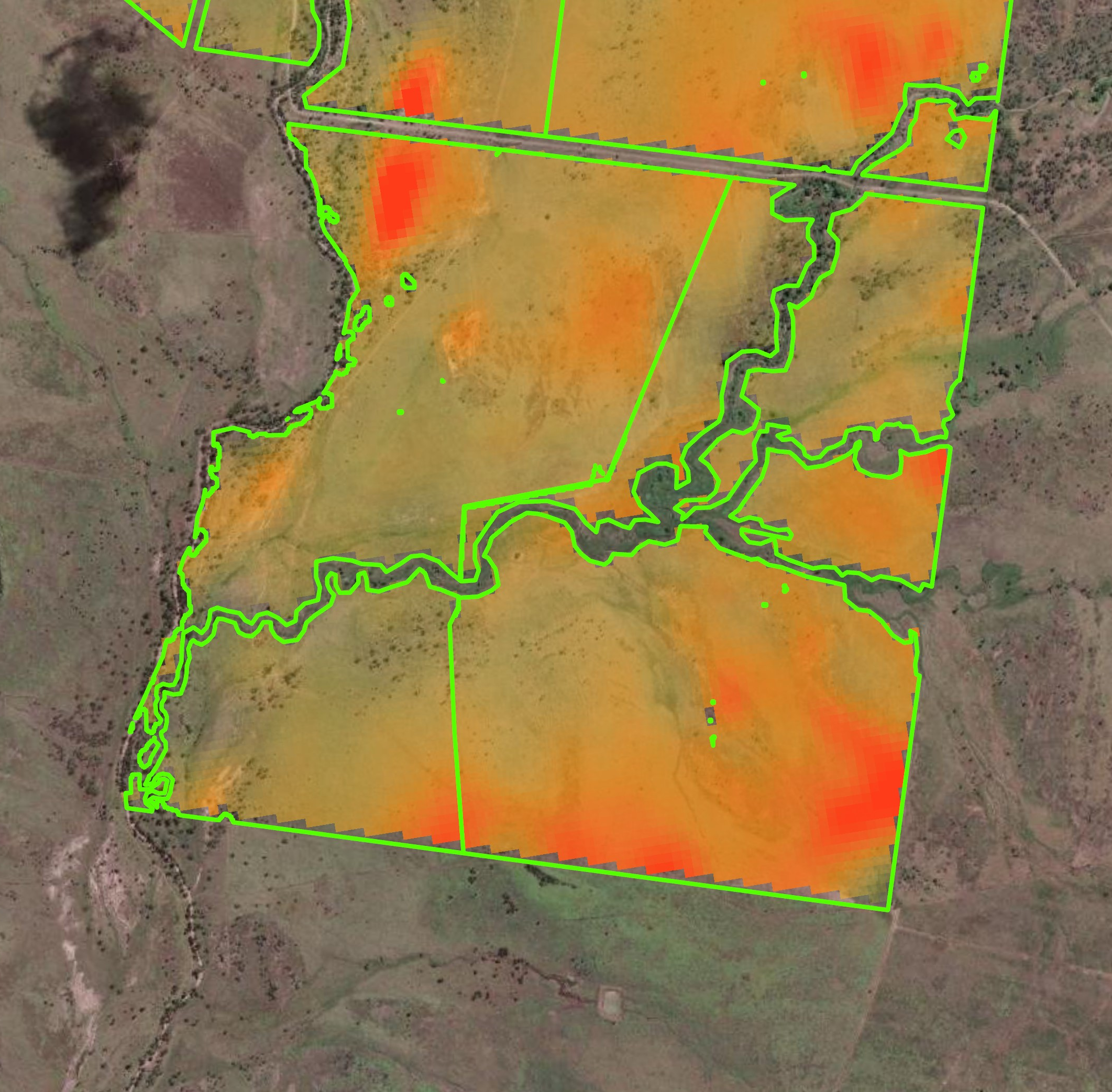
Using remote sensing, dynamic reference pixels and spatial analytics, DROVER Monitor and VerterraPROVE both isolate management impact from climatic variability to map changes in vegetation cover and sediment movement across entire catchments or landscapes, giving us a reliable picture of how land management actions are influencing soil health and water quality flowing into catchments.
This capacity to quantify ecological change - not through models alone, but through verifiable satellite data - allows landholders, corporations and institutional investors to demonstrate real progress against environmental baselines. It’s the empirical foundation of any trustworthy ESG claim and a cornerstone of emerging Taskforce for Nature-Related Financial Disclosure (TNFD)-aligned reporting.
Image: VerterraPROVE and DROVER Monitor both identify risks within a landscape and direct management actions to high-risk areas
IMPROVE - Engineering Resilience and Productivity
Once we can measure, we can manage.
Ecological engineering applies systems thinking to design holistic land management approaches that are both productive and regenerative. Through our Natural Capital Approach, we analyse how different land uses - from grazing and cropping to reforestation and biodiversity restoration - interact spatially and economically.
By modelling the highest and best use of every hectare, we identify the mix of practices that maximise both yield and ecosystem health. For example, a degraded grazing paddock may deliver a higher return through improved pasture management that retains more vegetation, builds soil carbon and reduces sediment loss. Meanwhile, nearby cleared riverine corridors may generate more economic and environmental value through environmental plantings, generating Australian Carbon Credit Units (ACCUs) or biodiversity credits.
The result is a mosaic of complementary enterprises that reinforce one another - improved ground cover enhances carbon sequestration; restored vegetation stabilises hydrology; productive soils sustain long-term profit. Each ecological gain feeds back into financial resilience. The approach recognises that a highly productive landscape is also a healthy landscape.
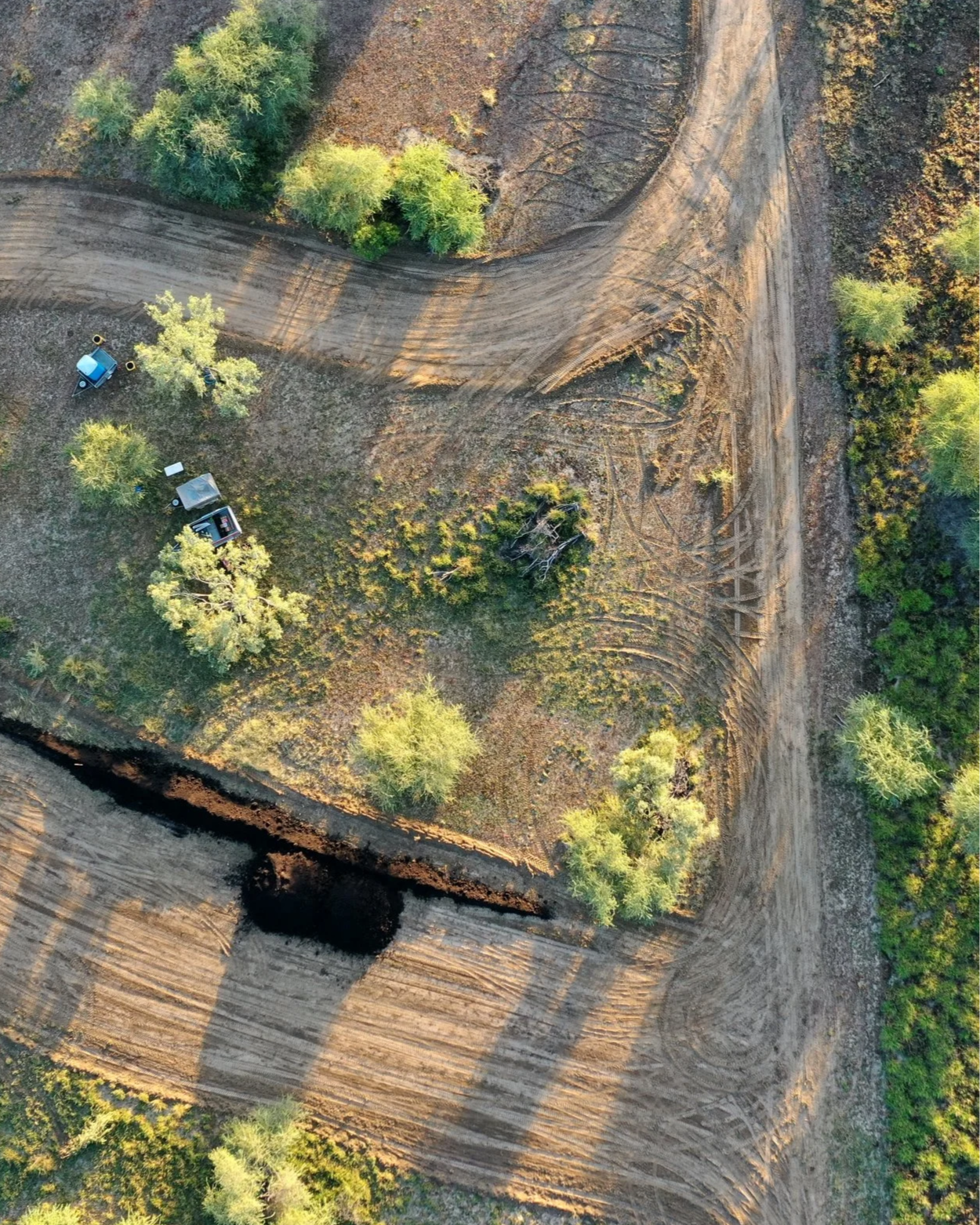
Image: Overhead shot of the Verterra ReVert Landscape Rehabilitation team at work, implementing soild amelioration through ReVive Soil Solutions and ReValue Nutrients
VALUE - Turning Stewardship into Return
The final step is to convert proven ecological improvements into financial value streams.
Verterra’s DROVER Credit or ReValue Ecosystems services enable investors to monetise verified outcomes through existing and emerging markets - from ENVOMARK Reef Credits and the new Australasian Catchment Water Improvement Standard (ACWIS) for sediment abatement, to ACCUs, and forthcoming biodiversity credits. But the economic benefits extend far beyond these instruments.
Regeneratively managed land appreciates faster, attracts lower regulatory risk, and often delivers more stable cash flow. For individual farmers, it may mean accessing lower bank interest or insurance premiums. For portfolio investors, that means higher risk-adjusted returns and genuine ESG integrity. Stewardship becomes not a cost of doing business but a source of income - a differentiator in markets that increasingly reward evidence of impact.
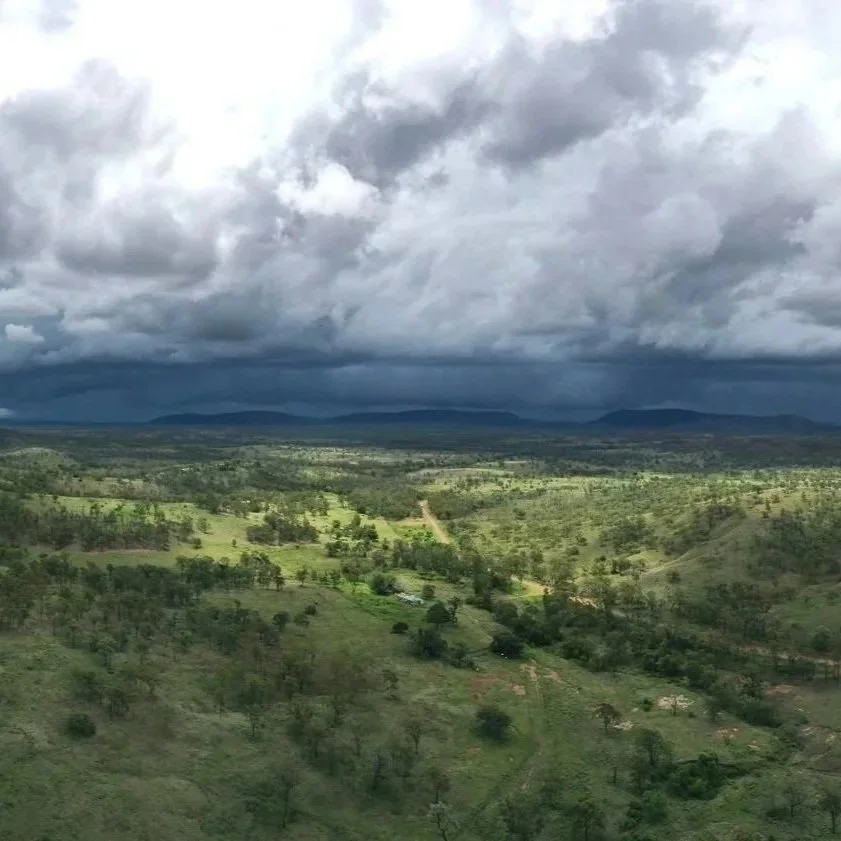
Image: Well managed land appreciates value, attracts a lower risk profile and delivers more stable cash flow.
The convergence of markets and ecology
Momentum is building. Global policy is tightening around nature-positive mandates; corporate disclosure regimes are expanding; and capital is searching for credible exposure to natural-asset growth. Yet many investors remain uncertain about how to engage without slipping into greenwash.
This is where data-driven ecological engineering provides a competitive edge. It connects the macro drivers of sustainable finance with the micro-mechanics of land management. In Verterra’s projects across Australia and overseas, integrating DROVER Monitor and VerterraPROVE analytics with regenerative land management practices has delivered measurable increases in soil carbon, improved water quality, and diversified revenue streams for landholders.
Across a series of property analyses, stacking grazing optimisation with carbon, sediment and biodiversity opportunities revealed the potential to double or triple conventional investment returns on cattle alone indicating that environmental health and financial performance are not competing objectives but reinforcing ones.
Beyond offsets: building a performance economy
The next wave of sustainability investment will not be about offsets or one-off credits. It will be about continuous performance — tracking how well ecosystems, and the businesses that depend on them are managed over time.
The PROVE – IMPROVE – VALUE framework operationalises this shift:
PROVE delivers the empirical foundation - verified data and transparent reporting.
IMPROVE provides the management pathway - ecological engineering to enhance function and resilience.
VALUE closes the loop - converting outcomes into tangible returns, both market and non-market.
Together, they form a closed feedback system - a true performance ecosystem - where profit and planet are measured by the same metrics of productivity, stability and regeneration and people are central to the equation.
Engineering the future of investing in nature
The world’s environmental and financial systems are converging faster than most realise. Insurance markets are already pricing nature-related risk; banks are exploring biodiversity-linked loans; and governments are embedding nature repair into infrastructure planning. Through mechanisms such as the Carbon Border Adjustment Mechanism (CBAM), and the European Union Deforestation Regulation (EUDR), stewardship verification is already a requirement for access to European markets.
In this environment, companies that can prove their environmental performance — and continually improve it — will not only mitigate risk but redefine value creation itself.
Ecological engineering offers the bridge between science and capital: it gives investors the tools to understand, quantify and participate in the restoration of natural systems without sacrificing return.
A call to rethink capital
At Verterra, we believe that the true measure of prosperity lies in how well our economic systems sustain the natural systems that support them. The emerging natural-capital market is not a niche; it is the foundation of a new economic paradigm — one that recognises that soil health, water quality and biodiversity are not side-effects of production, but the drivers of long-term productivity.
By designing landscapes that perform ecologically and economically, we can turn environmental accountability into competitive advantage — and, in doing so, create a legacy of value that endures.
The task ahead is not merely to invest in nature, but to engineer a future where nature itself becomes the most trusted asset class on Earth.

About the Author
Dr Glenn Dale is the Founder and Managing Director of Verterra Ecological Engineering, Australia’s first full-service ecological engineering company. With over 35 years’ experience in forestry, soil science and land rehabilitation, he has pioneered methods that turn environmental risk into economic and social value across the mining, agriculture and water-quality sectors.