
Turning Risk into Resource: Land and Irrigation Planning for Coal Seam Gas Water Use
Services: Technical assessment, planning and strategic regulatory counsel
Location: Central-Southern Queensland
Date: 2009-2012
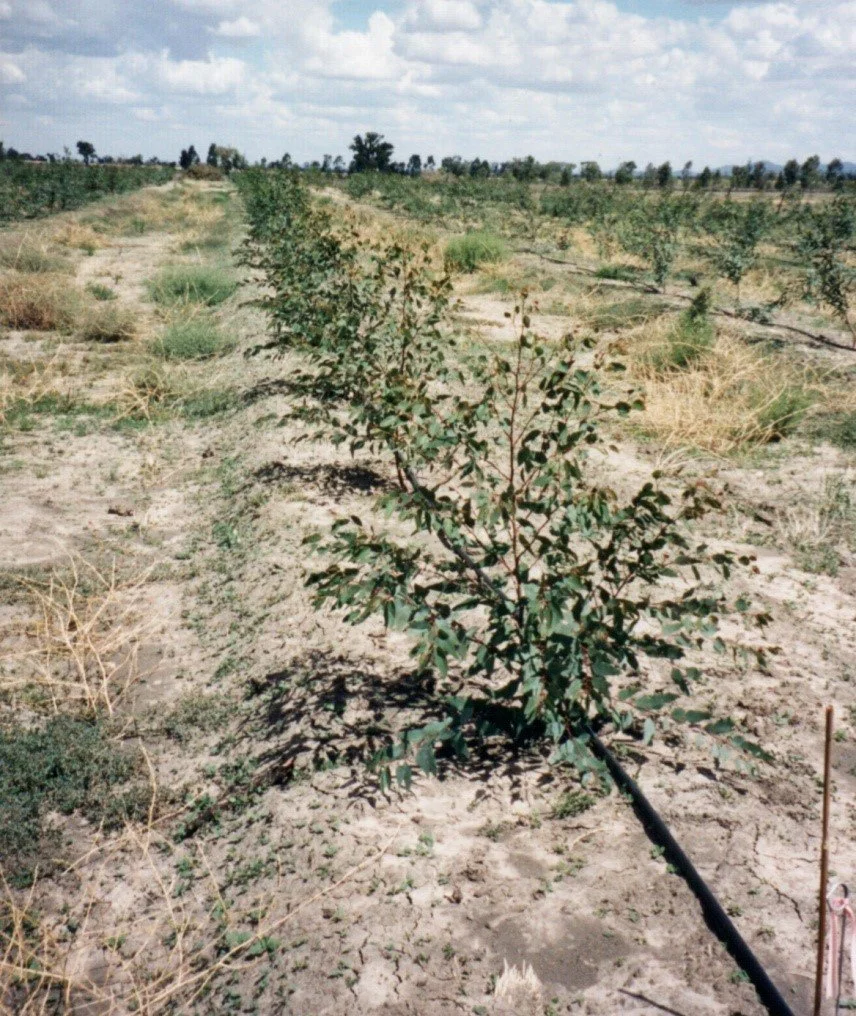
Irrigated saplings thriving in 2011
Our Scope
To enable sustainable, large-scale irrigation using coal seam gas (CSG) water, QGC required both rigorous technical assessment of candidate land and a well-prepared regulatory submission for a beneficial use approval. The project had to address marginal soils in a region with limited experience in intensive irrigation, while aligning with environmental safeguards and regulatory expectations.
Verterra was engaged to deliver a detailed land capability study, support irrigation system planning, and provide strategic guidance in the preparation of QGC’s Beneficial Use Plan submission.
Challenges included:
Marginal land conditions: The property had not previously been used for intensive agriculture, and soils posed potential limitations for sustained irrigation.
Complex approvals process: CSG water reuse is tightly regulated due to potential risks to soil, surface water, and groundwater resources.
Regulatory timing pressures: QGC aimed to avoid delays in securing approval by ensuring their submission was scientifically sound and aligned with regulatory criteria.
Integration of multidisciplinary inputs: Success depended on bringing together agronomic, hydrological, environmental, and regulatory knowledge into a cohesive project plan.
Verterra’s Solution
Verterra applied a multi-disciplinary, evidence-based approach across technical assessment, strategic advisory, and regulatory alignment.
Land Characterisation
Detailed site assessment of a 5,000ha property including desktop spatial analysis, field reconnaissance, and soil sampling
Soil pit characterisation, threshold electrolyte conductivity testing, and Plant Available Water Capacity (PAWC) mapping
Electro-Magnetic (EM) surveys, soil type mapping, and functional land capability classification
Integrated GPS-captured data into digital land capability maps, including irrigation rate recommendations and crop suitability indexing
Beneficial Use Plan Review
Reviewed QGC’s draft beneficial use application for irrigated plantation cropping
Provided technical advice on irrigation water quality requirements specific to local soil conditions
Evaluated risks and critical design parameters including salinity management, irrigation scheduling, and system design
Ensured the plan aligned with Queensland regulatory expectations, supporting a smoother and faster approval process
Strategic Support & Advisory
Applied deep understanding of CSG water reuse frameworks, including regulator review pathways
Delivered insights into soil permeability changes under irrigation in partnership with the University of Southern Queensland
Framed the scientific rationale in language appropriate for regulators and technical stakeholders
Ensured that agronomic design and environmental protection were balanced in project recommendations
Project Highlights
Produced high-resolution land capability maps and suitability assessments across 5,000 ha
Strengthened the Beneficial Use Plan with science-backed, regulator-ready language and analysis
Integrated field data and environmental modelling to guide irrigation design and risk mitigation
Enabled collaboration between scientific and regulatory stakeholders to accelerate project implementation
Outcomes
Informed investment: Gave QGC the confidence to proceed with a multi-million-dollar land acquisition and irrigation development
Regulatory readiness: Delivered a scientifically defensible beneficial use plan, reducing approval risk and timeline
Risk-to-value conversion: Reframed CSG water from a regulatory liability to a productive agricultural asset
Industry leadership: Advanced industry best practices for land assessment and beneficial reuse of CSG water in challenging environments