
Transforming unproductive saline land into productive bioenergy forestry plantations
Client: TPC (Tanganyika Planting Company)
Services: Forestry, saline and sodic land management, forestry trial design and analysis, spatial analytics and GIS, soil assessment, species selection
Location: Moshi, Tanzania
Date: 2016-2018
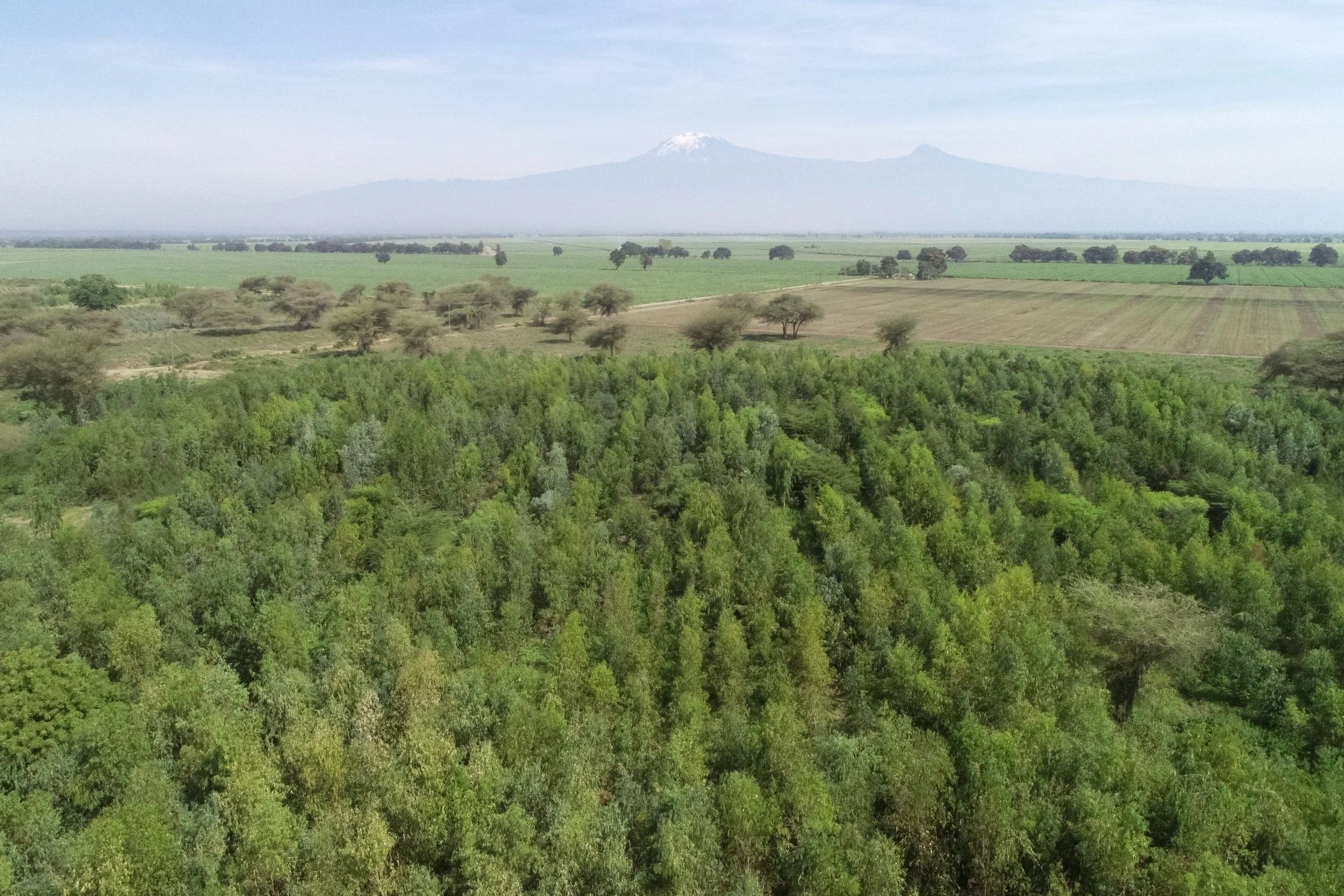
Species selection is key to establishing a commercially viable bioenergy plantation under challenging saline conditions.
Overview
TPC operates a 16,000-hectare sugar plantation estate in Tanzania, which included approximately 1,100 hectares of unproductive saline land. While TPC was able to generate energy from sugar cane bagasse for part of the year, the business remained dependent on unreliable grid power at other times.
TPC sought to investigate whether salt-tolerant tree species could be identified to convert unproductive saline land into productive woody biomass plantations capable of supporting long-term renewable energy generation.
Verterra was engaged trial and select species suited to saline soils and develop the silvicultural practices required to establish commercially viable bioenergy plantations under challenging saline conditions.
PROVE
Understanding saline landscapes and identifying viable biomass production systems
Verterra undertook a comprehensive technical assessment program to understand the interaction between soil salinity, species performance and biomass productivity across the proposed plantation areas.
The work included:
Detailed review of soil data to understand the site characteristics
Electromagnetic (EM) soil survey to map salinity variation
Additional targeted soil sampling to calibrate EM survey results
Identification of candidate species and provenances for trial evaluation
Statistically robust trial design
Design of silvicultural trials to identify preferred management practices
Trial assessment and analysis
Identification and recommendations on preferred species and management practices for commercial deployment
By combining spatial soil analysis with forestry science, Verterra established an evidence base for scalable bioenergy forestry development on previously unproductive soils.
IMPROVE
Trial design and implementation to build saline land forestry systems
Verterra designed a series of replicated trials to test 25 species, 75 provenances, and multiple silvicultural management approaches across a range of saline soil conditions. Subsequent growth assessment established strong correlations between soil salinity, survival and growth performance for each species.
These trials helped identify the management practices required to maximise tree survival, growth performance and plantation productivity, and ensure operational reliability under saline conditions.
This work enabled TPC to:
identify saline land suitable for biomass production
forecast plantation productivity and biomass yield
better understand species suitability under varying site conditions
make better future plantation planning and investment decisions
VALUE
Unlocking renewable energy potential from degraded land
The project demonstrated how unproductive saline land could be transformed into productive renewable energy plantations.
Through soil assessment, robust species selection, and plantation management systems, the work established a foundation to:
Reduce reliance on unreliable grid electricity
Support long-term energy resilience
Improve utilisation of previously unproductive land assets
Identify commercially viable woody biomass species
Provide a foundation for commercial bioenergy plantation investment
The integration of salinity mapping, species trials, productivity forecasting and operational forestry systems provided TPC with greater confidence to progress commercial plantation establishment.
By aligning forestry science, renewable energy objectives and landscape rehabilitation principles, Verterra helped support a more resilient and productive land use model for marginal agricultural land.