Australia’s First Beneficial Reuse of Coal Seam Gas Water
Client: Santos Energy Company
Location: Injune region, QLD
Date: 2008 - 2010
Scope: Develop a practical, cost-effective and environmentally sustainable option to manage large volumes of saline-sodic coal seam gas water.
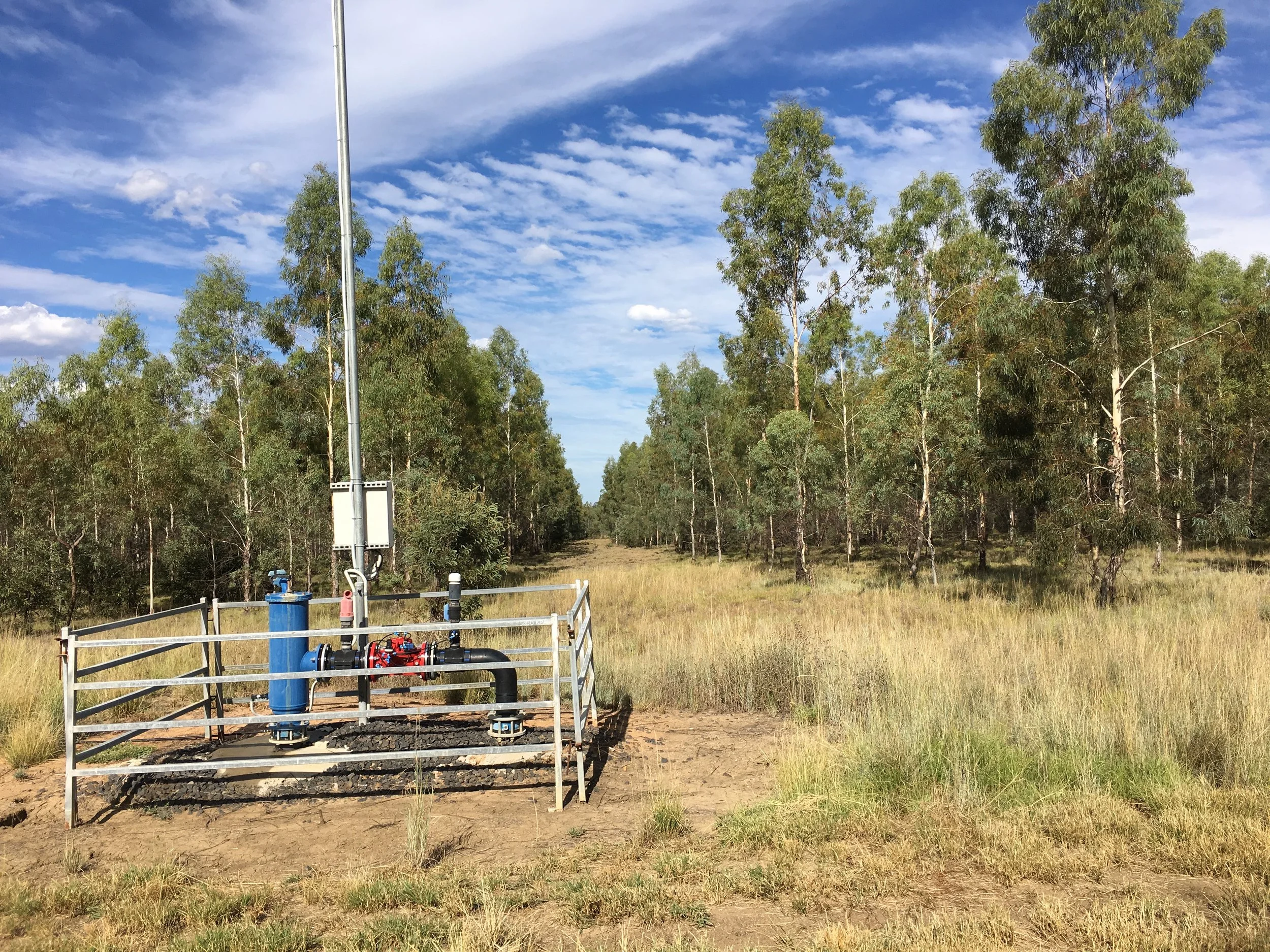
Saline-sodic water is a common by-product of Coal Seam Gas production, considered a waste in Queensland and must be managed in accordance with environmental regulations.
Extraction of Coal Seam Gas (CSG) requires the extraction of water which - if not managed responsibly - can pose serious environmental risks to groundwater systems and surrounding ecosystems. Typically saline-sodic, improper handling of CSG water can degrade soil structure and impact agricultural productivity.
Our Solution
Verterra ran feasibility studies and developed a system design to manage over 10 ML/day of saline CSG water. Rather than relying on costly and energy-intensive water treatment plants, we identified the opportunity to develop a nature-based, performance-driven alternative.
Project Highlights
Leveraging decades of experience in irrigated fodder and forestry systems, Verterra pioneered an integrated approach which included:
Design, project reporting and milestone control.
Assistance securing regulatory approvals;
Project governance and stakeholder engagement;
Occupational health and safety (OHS), risk, and resource management.
We transformed a regulatory and environmental challenge into an appreciating asset of native forest plantations and irrigated fodder crops that meet compliance requirements, while also delivering measurable environmental and community benefits.
Outcomes
Built an appreciating asset: over 1,250 hectares of irrigated native eucalypt forest plantations and more than 500 hectares of irrigated fodder crops.
Environmental gains: Improved soil condition, avoided runoff or contamination, and enhanced ecosystem services.
Community benefit: Productive land use and job creation.
Regulatory breakthrough: Australia’s first licence granted for beneficial reuse of CSG water at this scale.
Cost-effectiveness: Reduced reliance on traditional water treatment plants, lowering capital and operational expenditure.