
Aligning Ambition with Action: 5 Critical Success Drivers For The Australasian Water Quality Improvement Standard
By Andrew Yates – Sector Lead Ecosystem Services, Verterra
As catchment pressures mount across Australia and New Zealand - whether from sediment load, nutrient runoff, or emerging pollutant threats - the spotlight is turning to how to convert ecological action into measurable outcomes, market signals, and lasting impact.
Enter the Australasian Catchment Water Improvement Standard (ACWIS), announced last month by Eco Markets Australia.
Having worked on the front lines of water quality improvement for over a decade, including as a lead author on the Grazing Land Management Method for Reef Credits, I’ve seen first-hand how difficult it can be to design frameworks that are both environmentally rigorous and deliverable in practical terms on the ground.
This is a pivotal moment. If we can get this standard right, it could unlock a new era of action for landholders, councils, industries, and investors—far beyond the Reef catchments alone. But that success will depend on one critical thing: alignment between ambition and the ability to act.
I see five critical drivers that will determine whether we simply talk about ACWIS, or actually use it to deliver real change.
1. Markets Deliver Impact

Traditional regulation and public funding alone cannot meet the scale of nature’s repair needs. Government budgets are constrained, and infrastructure costs continue to escalate. That’s why ecosystem markets matter - they provide flexible capital, enable private investment, and mobilise actors who can deliver change on the ground. The ACWIS builds on the success of the Reef Credits program, which has already issued more than 60,000 credits – each representing reductions in sediment, nutrients and pesticides reaching the Great Barrier Reef.
Through a high integrity market mechanism, Reef Credits has shown we can align landholder action with buyer demand, tracing the path from intervention to verified outcome. For landholders, catchment managers, investors and corporates, ACWIS creates a shared reason to act across a range of catchments, and a measurable way to demonstrate impact.
2. Action Drives Progress
A common criticism of standards and methodologies is they can be cumbersome, overly academic or slow to rollout. But the reality is: progress is made by doing, not waiting. With ACWIS, we can act today - deploy projects, reduce pollutants, engage landholders – and we can do this while the standard, tools and methods continue to evolve. Like any scientific endeavour, the key is to build a feedback loop based on current best available knowledge: implement, monitor, learn, refine.
The ACWIS standard has clearly defined eligibility criteria, risk of reversal assessments, and pollutant-specific crediting requirements that give confidence that we can deliver results today, while continuing to refine methods and implementation pathways over time.
What matters most is mobilising action now, not delaying until “everything is perfect”.
3. Collaboration Multiplies Results
No single stakeholder can do this alone. Landholders, First Nations communities, scientists, regulators, investors, buyers - all must be part of the conversation. ACWIS emphasises this by inviting participation from all sectors and opening the methodology development process via public consultation.
When we collaborate, we build frameworks that are practical, trusted, and adoptable. We move from stating problems to offering solutions. I have heard: if you want to go far, you go together, and ACWIS gives us this opportunity.
4. Scaling Success
We need more than isolated projects, we need repeatable, regional scale solutions. Too often we see pilots that sit alone. ACWIS is designed to unlock scalable outcomes: a standard applicable across defined catchment settings and for multiple pollutants. It has the potential to transform the way we tackle water quality issues.
For us at Verterra, this means our innovations in sediment, nutrient and land management monitoring can now plug into a broader market architecture, unlocking larger flows of investment and more meaningful ecosystem outcome.
5. Participation Fuels Innovation
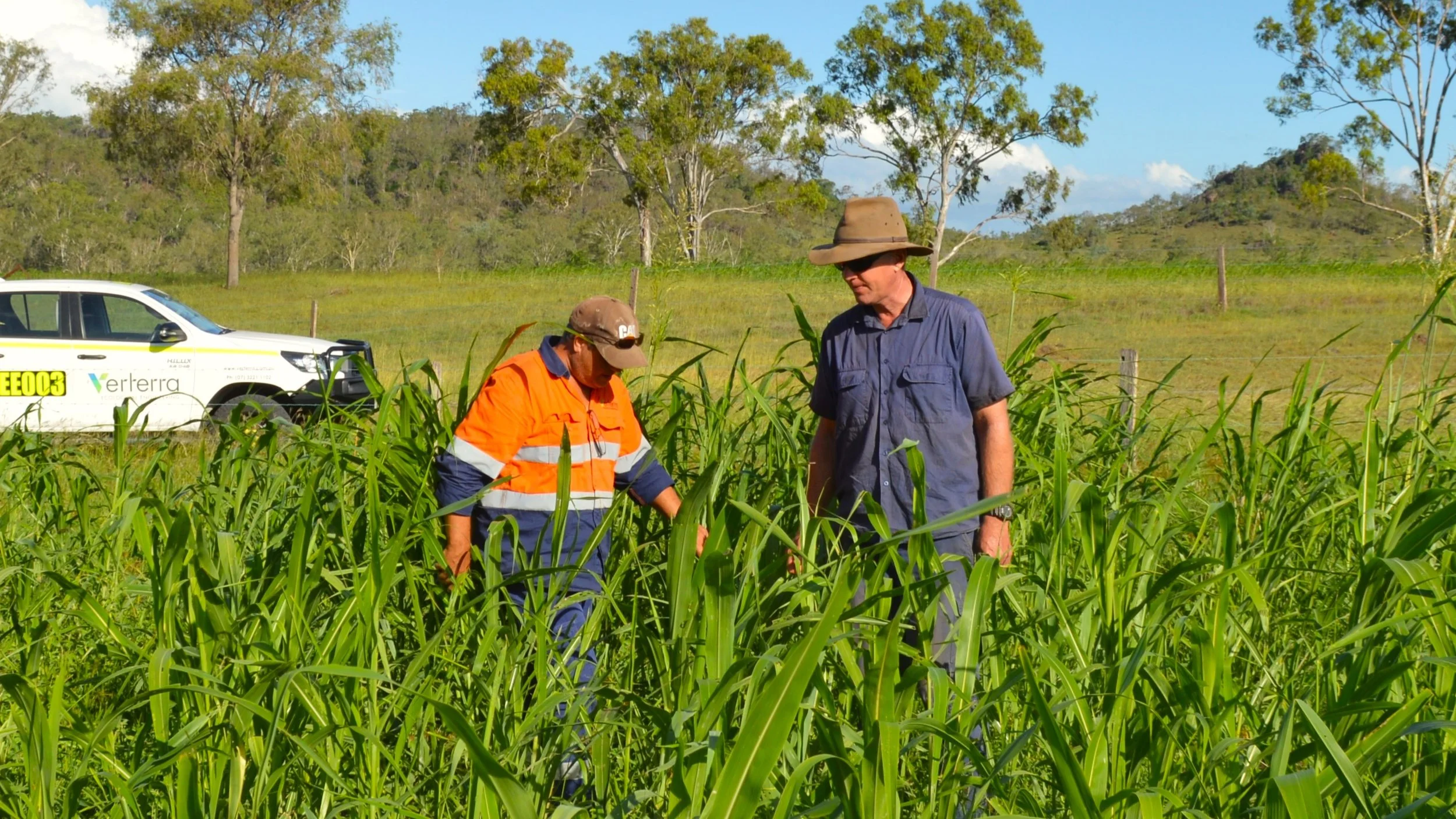
True progress comes when many hands join in. Landholders, communities and businesses, by participating, can ignite innovation in practices, data use, monitoring technologies and business models. ACWIS offers a mechanism to reward participation, not just compliance. It invites Methodology developers, project proponents, landholders, finance, and regulators to be part of shaping how nature is valued and improved.
This shared effort creates momentum, cleaner waterways, healthier catchments, and a value system that recognises investment in natural capital, not just as a cost, but as a scalable opportunity.
Why This Matters Now
For landholders and communities, having a clear framework is empowering. With ACWIS, they gain access to a structured pathway: from activity through to verified credit, tracked in a registry, with defined rules and transparent governance. The clarity gives confidence to invest, to improve practices, to engage in long term land stewardship that is valued and rewarded.
For corporates and buyers, ACWIS offers a credible mechanism to support water quality targets, ESG goals, supply chain integrity or regulatory commitments.
For regions and catchments facing pressure from climate, land use change and pollution, ACWIS opens new finance channels and shifts the narrative from “we can’t afford to act” to “we can’t afford not to act”.
A Call to Action
I encourage anyone with a stake in catchments, whether a grazier, a water manager, a regional council, or an investor, to engage with ACWIS. Share your experiences of working with the standard, challenge assumptions, help refine the methods. Because if we’re silent, we leave the standard to others. If we act, we build it together.
But I implore you, if you want to build and improve this opportunity, offer solutions, don’t simply point out problems. ACWIS is a starting point, built off the back of Reef Credits, which prove it can be done. Now it’s up to all of us to develop it into something that can change how water quality is valued and improved across Australasia for decades to come.
At Verterra, we are ready to partner, to develop methodologies, deliver projects, and monitor impact to scale success. I invite you join us.
For more detail and to view the ACWIS documents, visit the EcoMarkets website.
Contact us at Verterra to explore how your land or investment could engage in this evolving market for water quality improvement.